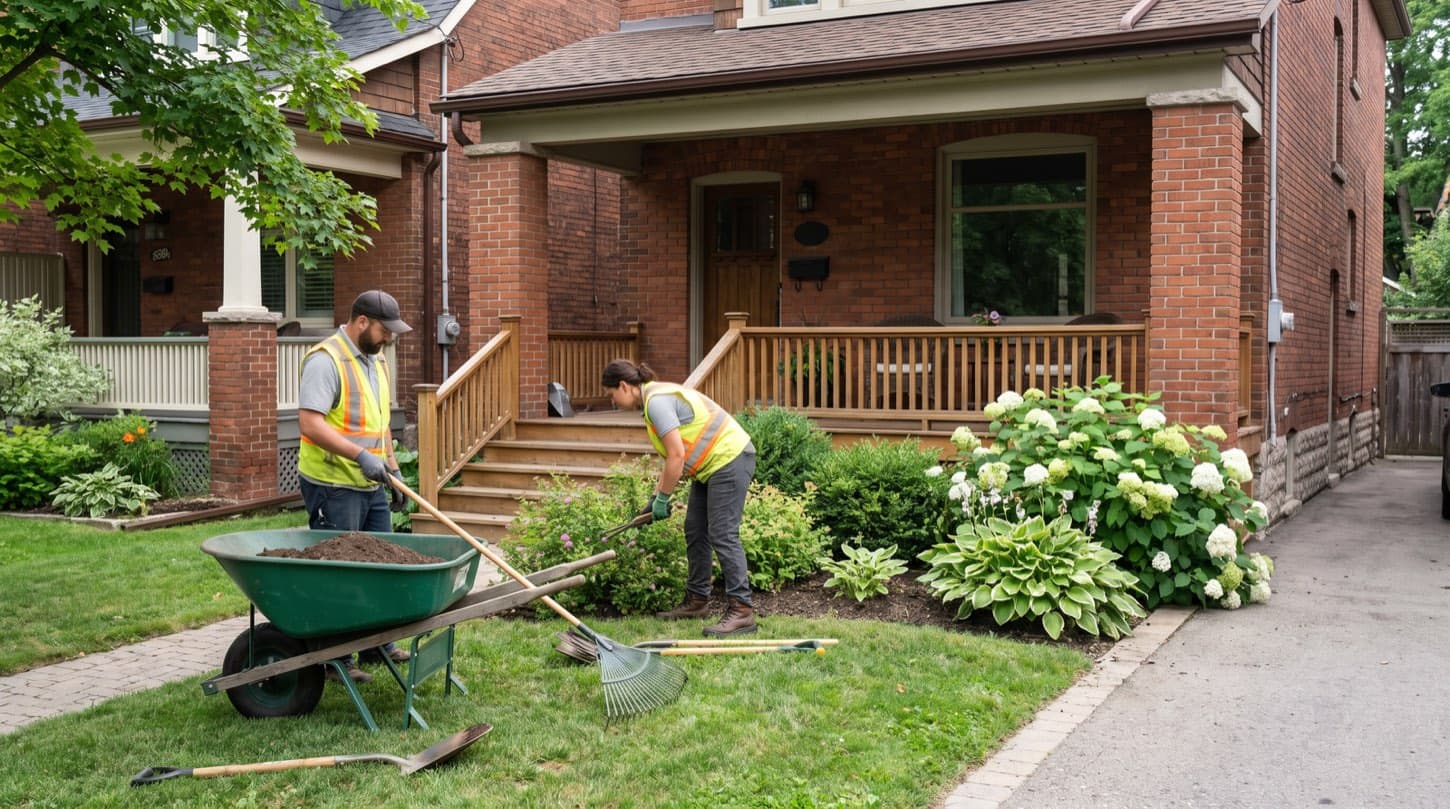
Answer First: Before a landscaper starts work in Ontario, ask for two things: a WSIB clearance and proof of commercial general liability insurance. The WSIB clearance is free to verify online and confirms the business is registered and current on its premiums; liability insurance covers damage to your property or injury to others. The two cover different risks, and if a worker is hurt on your property or your home is damaged while the contractor is uninsured, you can be the one left exposed. Verify both before any work or payment.
The cheapest quote can become the most expensive job the moment someone gets hurt or something gets broken and there's no coverage behind it. In Ontario, protecting yourself is a five-minute check most homeowners skip.
The two documents that protect you
They cover different risks, and you want both. People treat "insured" as one thing; for a landscaper it's really two.
WSIB coverage — Ontario's mandatory workplace-injury insurance, run by the Workplace Safety and Insurance Board. It covers the contractor's own workers if they're injured on the job.
Commercial general liability (CGL) — private insurance that covers damage the contractor causes to your property, or injury to other people, while doing the work.
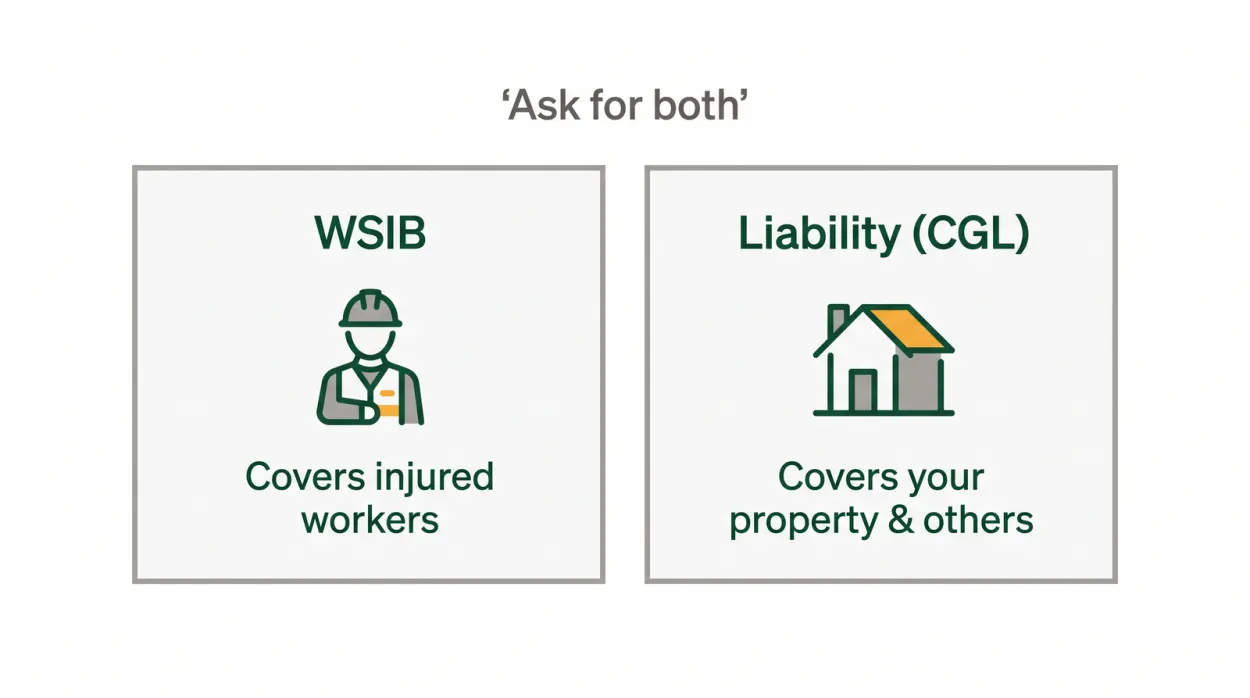
Miss the distinction and you can hire someone with a liability policy but no WSIB, or vice versa, and think you're covered when a gap is wide open. Ask about both by name.
Quotable: WSIB covers the landscaper's injured workers; commercial general liability covers damage to your home and injury to others. They're separate policies — being told "we're insured" answers only half the question.
Why an uninsured landscaper is your problem
Because the exposure flows uphill to whoever hired them. If a worker falls off a ladder on your property and the contractor carries no WSIB coverage, or a crew damages your foundation or a neighbour's car and there's no liability policy, you can end up entangled in the cost and the claim. The person who saved a few hundred dollars on a cash job is the person holding the risk.
That's the whole reason to verify up front. It isn't bureaucracy — it's moving the risk back onto the professional where it belongs.
From the data: Of the 650 landscaping companies YardQuote tracks across the GTA, verifying credentials is left entirely to the homeowner — no directory listing, ours included, is a substitute for asking a specific contractor for their own current clearance and insurance certificate before they start.
How to actually check — it's free and fast
Neither check costs you anything, and both take minutes.
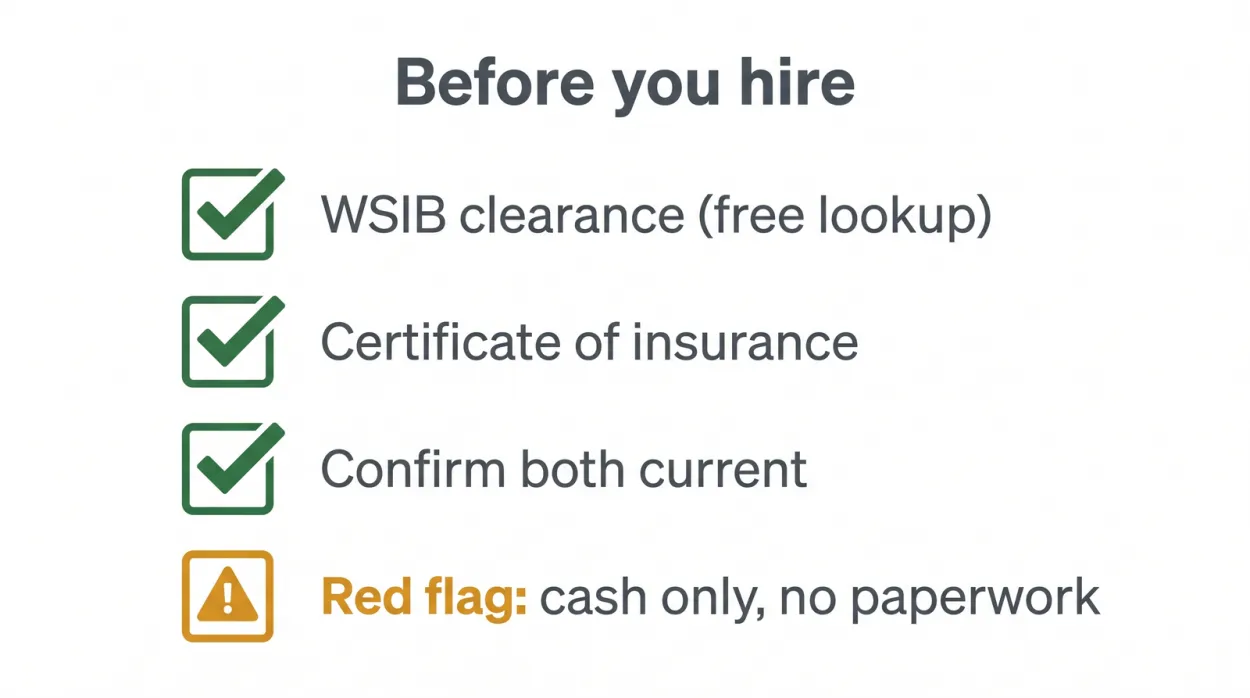
- Pull the WSIB clearance. The WSIB's clearances service lets anyone find, view, and download a business's clearance online for free, no account needed. A valid clearance confirms the contractor is registered and up to date on premiums and reporting, and it's good for up to 90 days.
- Ask for a certificate of insurance. This is the proof of commercial general liability. For a big job, call the broker named on the certificate to confirm the policy is active and the coverage amount is reasonable for the work.
- Confirm both are current, not expired, and in the name of the business you're actually hiring.
- Watch the red flags. Cash-only with no paperwork, no written contract, a big up-front deposit, or reluctance to provide a clearance or insurance certificate. A legitimate landscaper expects these questions and answers them fast.
This check pairs naturally with normalizing your quotes — a suspiciously cheap bid sometimes turns out to be the uninsured one. See how to compare fairly in our guide to why Toronto landscaping quotes vary, and for larger structural jobs, our note on retaining wall engineering and permits covers the paperwork that protects you there. Compare local pros on the landscaping cost page or browse landscaping companies near you.
Want vetted local pros who expect these questions? Request a quote and compare up to three side by side — your contact details only go to the one you pick.