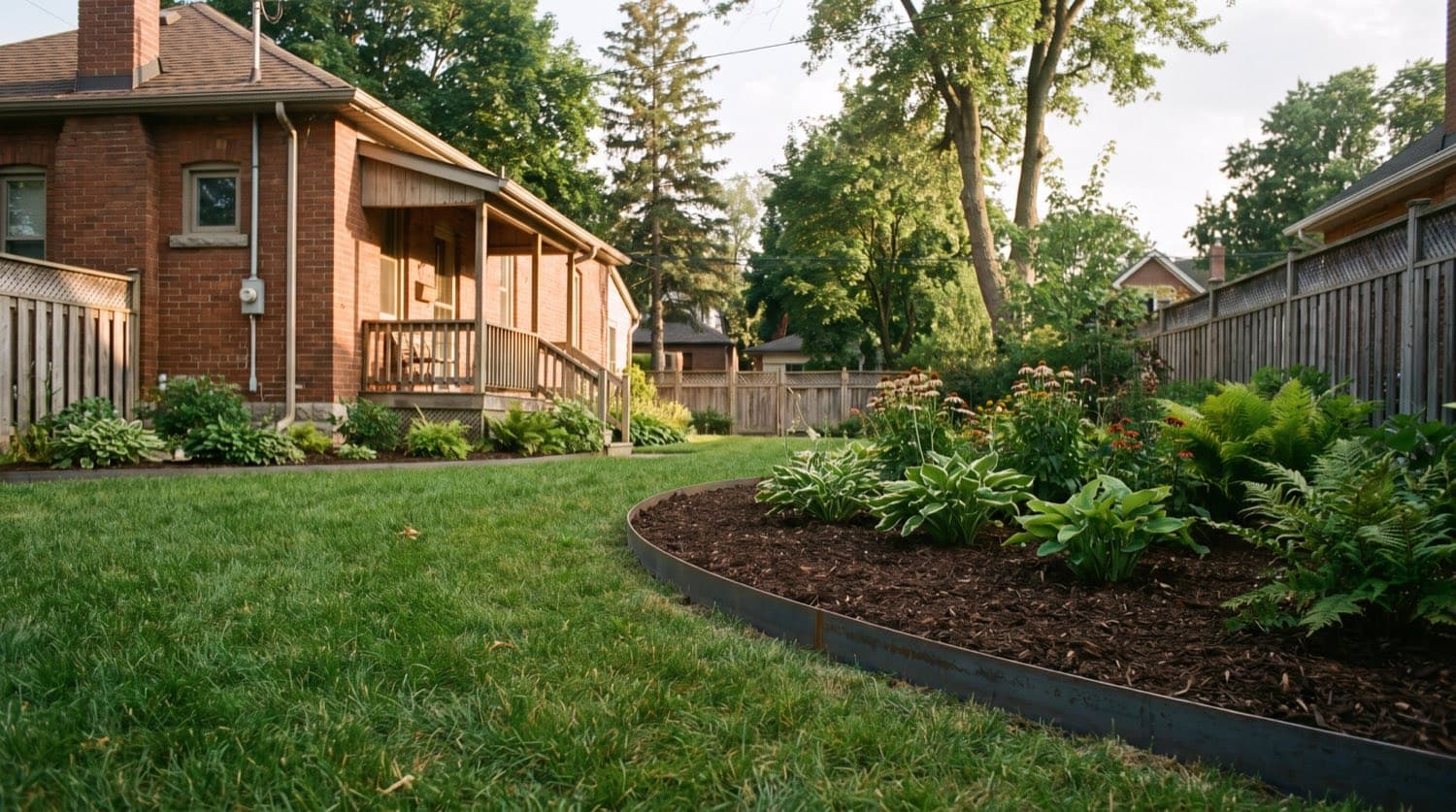
Answer First: The main landscape edging materials trade off durability, looks, and cost. Metal edging (steel and aluminum) lasts longest and holds the cleanest line, especially along driveways; stone, brick, and concrete are the most decorative and durable but need a base; plastic is cheapest and easiest but the least durable and can look artificial (University of Illinois Extension). In Toronto, set any edging deep on well-drained soil so winter frost cannot heave it.
Edging is the quiet detail that makes a yard look finished: the crisp line between lawn and garden bed. The material you pick decides whether that line stays sharp for decades or sags in a couple of seasons.
What are the main landscape edging materials?
There are four common choices, and they sit on a clear spectrum from cheap-and-easy to durable-and-decorative.
Metal edging — thin strips of steel or aluminum driven into the soil with stakes, prized for a nearly invisible, razor-clean line. Stone, brick, and concrete — solid units set as a border, the most decorative and substantial option. Plastic edging — flexible poly strip, the cheapest and most common DIY choice. Wood — timber or landscape ties, natural-looking but the shortest-lived in contact with soil.
Each wins on a different priority. The trick is knowing which priority matters most for your yard.
Quotable: Metal edging is the longest-lasting option and the best where side-strength matters, such as along a driveway; plastic is the cheapest and easiest but the least durable (University of Illinois Extension).
How do the edging materials compare?
Here is the head-to-head on the factors that decide the choice: durability, cost, looks, and how they handle a Toronto winter.
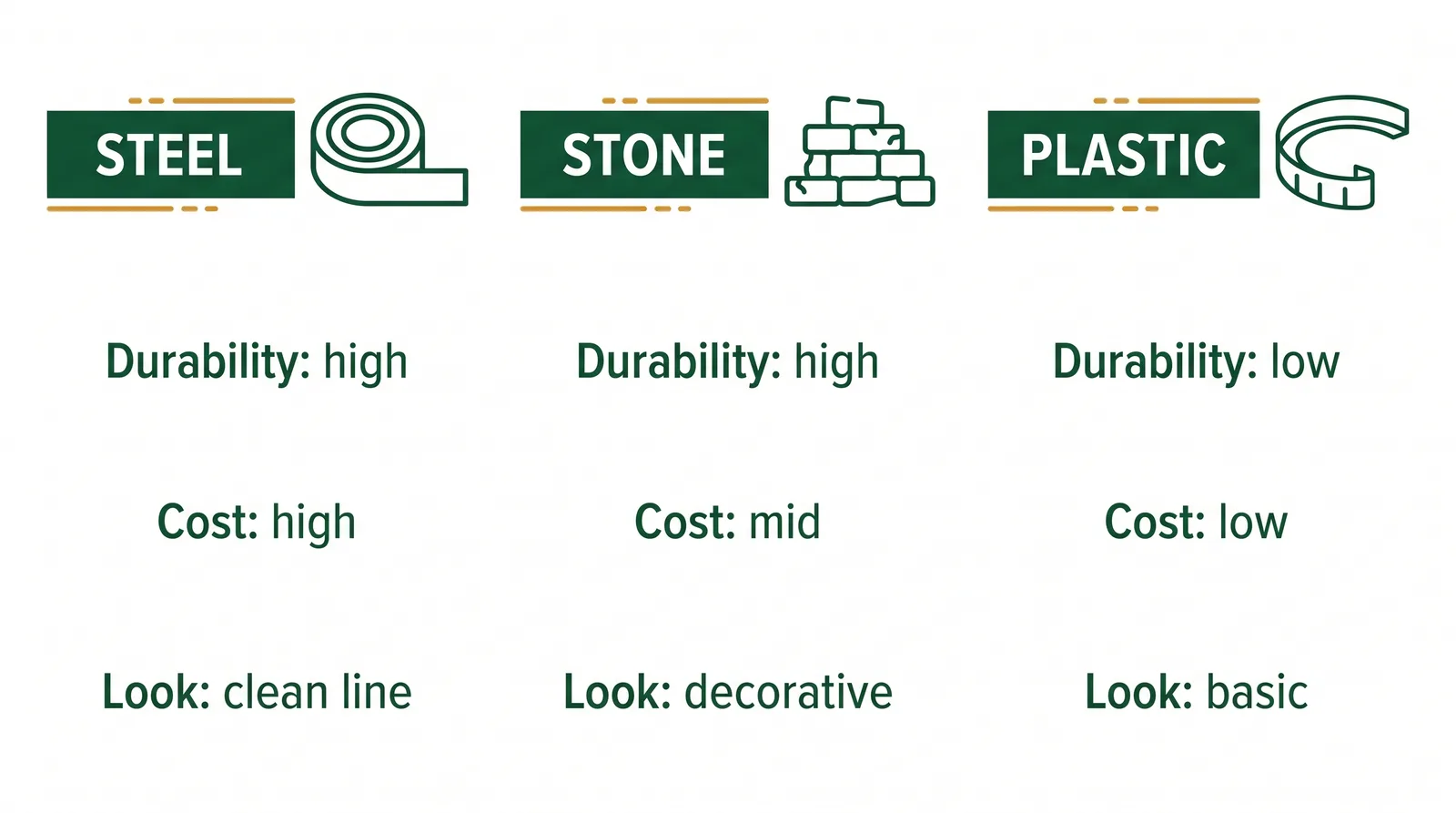
| Material | Durability | Cost | Look | Notes |
|---|---|---|---|---|
| Steel | Longest-lasting | High | Clean, minimal | Strong side-support; set deep vs frost |
| Aluminum | Long-lasting | Mid–high | Clean; silver can read unnatural | Won't rust; easier to bend |
| Stone / brick / concrete | Long-lasting | Mid–high | Decorative, substantial | Needs a sand or concrete base |
| Plastic | Poor | Low | Artificial | Round-top sinks less than flat |
| Wood (treated) | Medium | Low–mid | Natural | Rots over time in soil |
The standouts are the two ends. Metal earns its cost with longevity and the tightest line, which is why it is the go-to along driveways where an edge takes abuse. Plastic earns its place on price and ease, but you accept a shorter life and a less natural look.
From the data: Edging is a small line item on most of the 650 landscaping companies YardQuote tracks in the GTA, but it is the finishing touch that makes a bed-and-lawn job read as professional. The material choice is usually less about the yard than about how long you want the edge to stay crisp.
Which edging holds up in Toronto's freeze-thaw?
The one that is set deep and drains well. Toronto's freeze-thaw cycles are the real durability test, and they punish shallow or poorly bedded edging by heaving it out of line over winter.
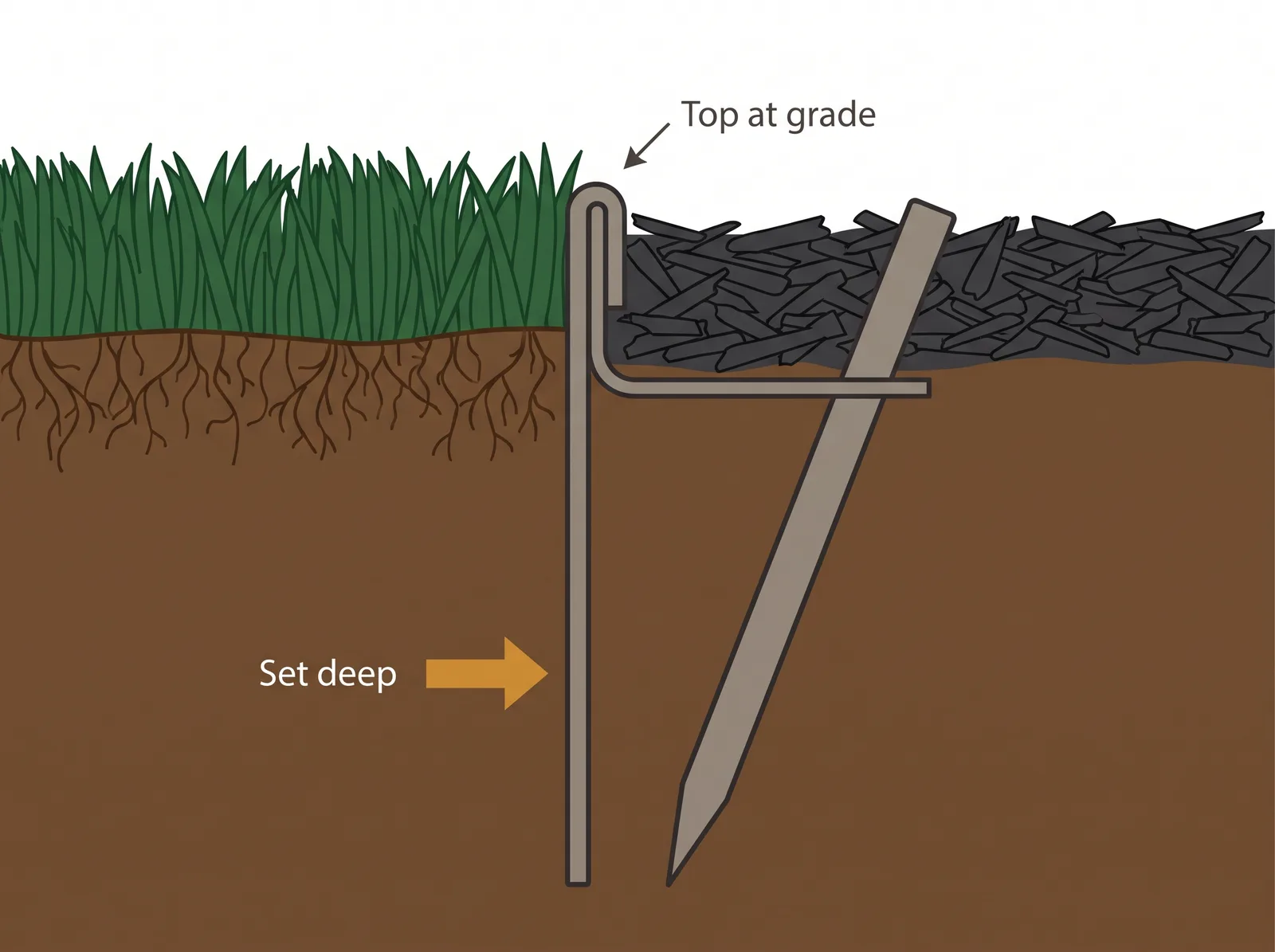
Steel resists this well when driven deep and firmly staked, though set too shallow it can heave. Stone and concrete need a proper sand or concrete base to stay level; stone should be at least 3 inches thick and 4 inches wide to actually hold back grass. Plastic should use a round-top profile, which sinks less than a flat one, and still be set deep. Wood is the weak link over the long run: even pressure-treated timber eventually rots in contact with damp soil.
Which should you choose?
Pick by your top priority. Choose steel or aluminum if you want the longest life and the cleanest line, especially along a driveway or path. Choose stone, brick, or concrete if looks lead and you want a substantial, decorative border, and you are willing to build a base. Choose plastic if budget and speed rule and the bed is a soft, curved shape where a temporary edge is fine.
Whatever the material, the install is what makes it last, which is the same lesson behind preventing winter damage to pavers: depth and drainage beat the freeze-thaw. If edging is part of a larger hardscape or garden project, price it with the rest on our landscaping cost page, or browse landscaping companies by area to line up quotes, and compare them the way we lay out in why Toronto landscaping quotes vary 3x.
Planning new beds, borders, or a full yard refresh? Request a quote and compare up to three vetted local pros side by side. Your contact details only go to the one you pick.