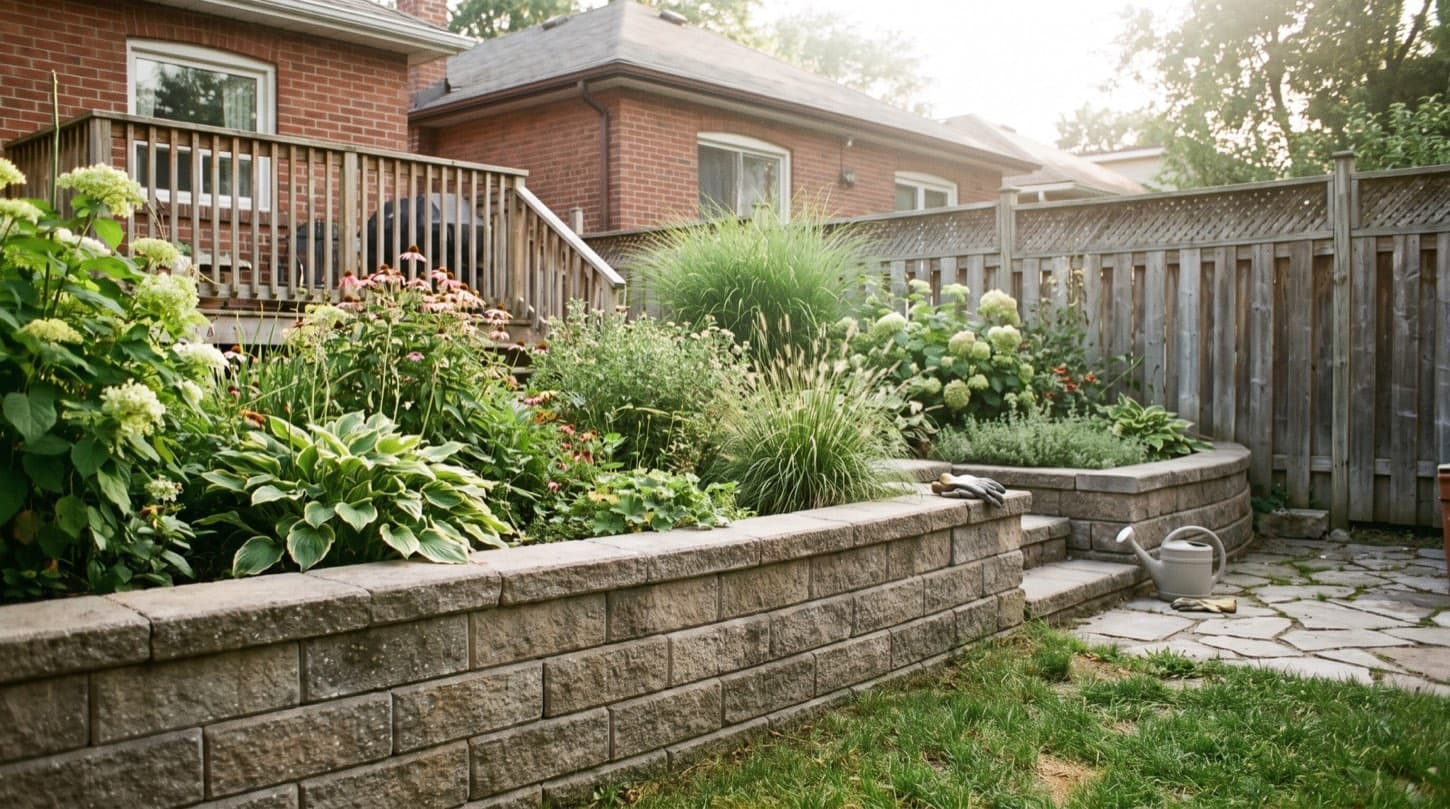
Answer First: A garden retaining wall under 1 metre on private property with no public access needs no permit in Toronto, and it's a genuinely doable DIY project with mortarless segmental blocks. Success comes down to two things most beginners rush: a compacted gravel base with a dead-level first course, and clean gravel drainage behind the wall so water can't build up and push it over. Keep a first project under 2 to 3 feet and it's a weekend job.
Not every retaining wall is an engineering project. A low wall to terrace a sloped bed, level a planting area, or tidy a grade change is well within a capable homeowner's reach — as long as you respect the two things that quietly decide whether it lasts.
Which garden walls can you actually DIY?
Low ones, on private land. The City of Toronto only requires a permit for a retaining wall more than 1 metre high that's on or adjacent to public property, a building entrance, or public-accessible private property. A short garden wall tucked in a private backyard falls outside that — no permit, no engineer, your call.
The practical DIY ceiling is lower than the legal one. Most mortarless block systems are built for walls up to about 4 feet, but for a first project stay under 2 to 3 feet. Below that, a mistake is a lean you can fix; above it, water and soil loads get serious fast, and once you approach 1 metre you're at the edge of permit-and-engineering territory.
Quotable: In Toronto, a retaining wall under 1 metre on private property with no public access needs no permit. That's the DIY zone — and for a first build, staying under 2 to 3 feet keeps the stakes low.
The base is the whole job
If you take one thing from this: the wall is only as straight as its first row. A small retaining wall stands or leans based on what's under it, not what's on top.
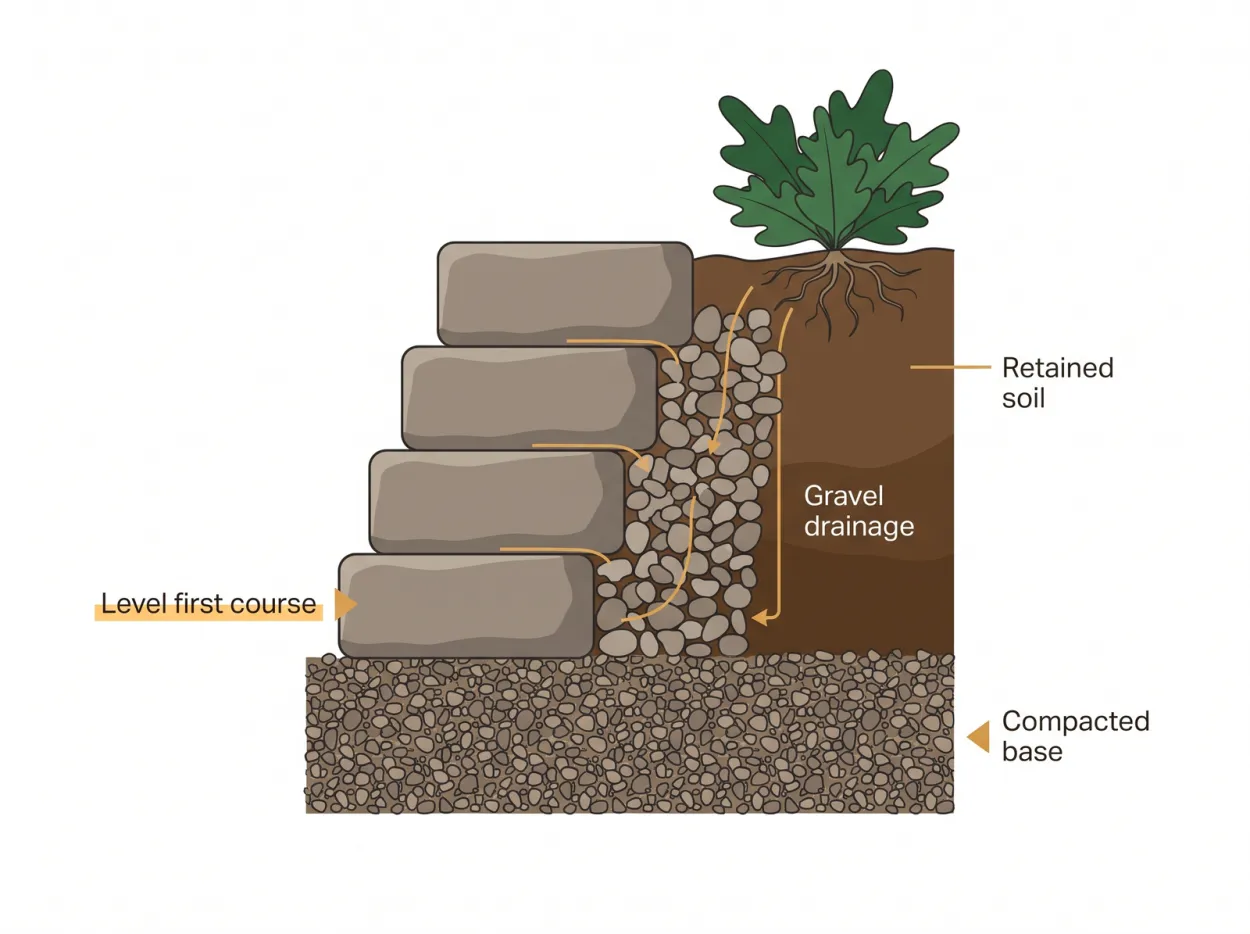
Following the NCMA segmental wall installation guidance, the four things a small wall must get right:
- A compacted gravel base. Excavate a trench, add several inches of ¾-inch crusher run or processed gravel, and compact it firm and flat. This is where most of your time goes.
- A dead-level first course. Set and level every block in the base row front-to-back and side-to-side. Everything above inherits this row's accuracy.
- Gravel drainage behind the wall. Backfill directly behind the blocks with clean ½- to ¾-inch crushed gravel — a drainage column that lets water escape instead of pooling. Walls approaching 4 feet also need a perforated drain pipe at the base.
- The built-in setback. Segmental blocks have a lip that steps each course slightly back, leaning the wall into the slope for stability. Just seat each course fully and the batter takes care of itself.
Batter — the slight backward lean built into a segmental wall as each course steps toward the retained soil, which helps the wall resist the outward push of the earth behind it.
Materials and ideas for a low wall
The look is your choice; the build principles don't change. Common options for a small Toronto garden wall:
- Segmental concrete block. The DIY default — mortarless, self-setting batter, widely stocked. Best beginner choice.
- Natural stone. A dry-stacked stone wall suits a cottage or heritage look; slower to build well.
- Pressure-treated timber. The budget option for a rustic bed edge; shorter lifespan than block or stone.
- Gabion baskets. Wire cages filled with stone, for a modern industrial look and easy drainage.
Use a low wall to terrace a sloped backyard into level planting beds, raise a tidy edge around a patio, or hold a grade change beside steps. Because it's low, it's forgiving of a learning curve.
What it costs, and when to just hire it
The DIY savings are real, and so is the line where hiring makes sense. If you'd rather have the labour done on a small accent wall under 2 feet, GTA market rates in 2026 run roughly $22 to $37 per face square foot for labour, about $30 typical (YardQuote retaining-wall cost data, 2026). Materials are on top.
From the data: Of the 61 retaining-wall specialists YardQuote tracks across the GTA, a low garden wall is the job homeowners most often take on themselves — and the redo call we see most is a wall that leaned because the base wasn't compacted or the back wasn't drained. Both are free to get right; they just take patience.
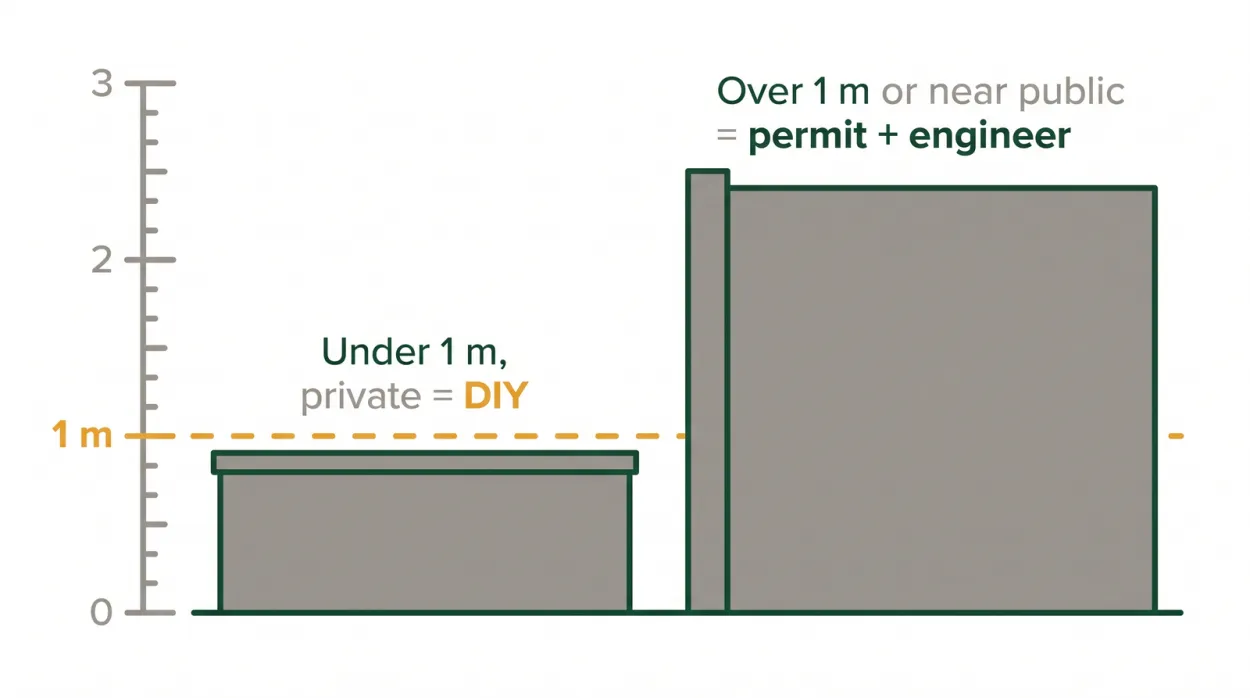
Hire out the moment the wall crosses about 1 metre, sits near public property, or has to hold back a slope or driveway above it — that's a permit-and-engineering job, not a weekend project. To compare real GTA pricing by material and height, use the retaining wall cost page or browse retaining wall contractors near you.
Wall bigger than a weekend? Request a quote and compare up to three vetted local contractors side by side — your contact details only go to the one you pick.