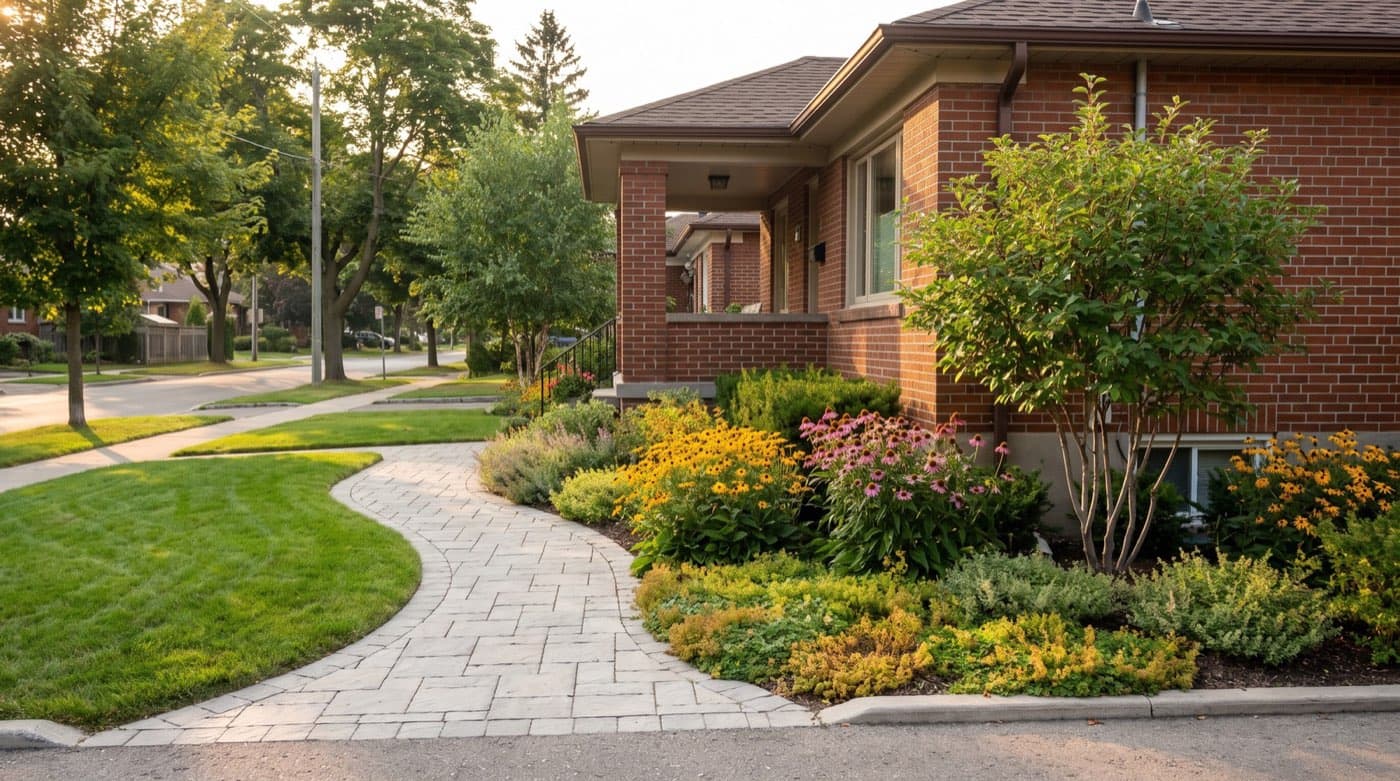
Answer First: A front yard that works in Ontario is built around winter salt and low maintenance: salt-tolerant native plants along the sidewalk and driveway, layered planting for curb appeal, a defined walkway, and enough soft, permeable landscaping to meet Toronto's zoning rule, which requires 75% of the by-law's required front-yard landscaping to be soft (artificial turf does not count). Get those right and the yard looks good in June and survives the following February.
The front yard is the one everyone sees and the one Ontario weather punishes hardest, with road salt, freeze-thaw, and a short growing season. The good front yards are not the fussiest; they are the ones designed for the climate and the rules. Here is how to build one.
Design for winter salt first
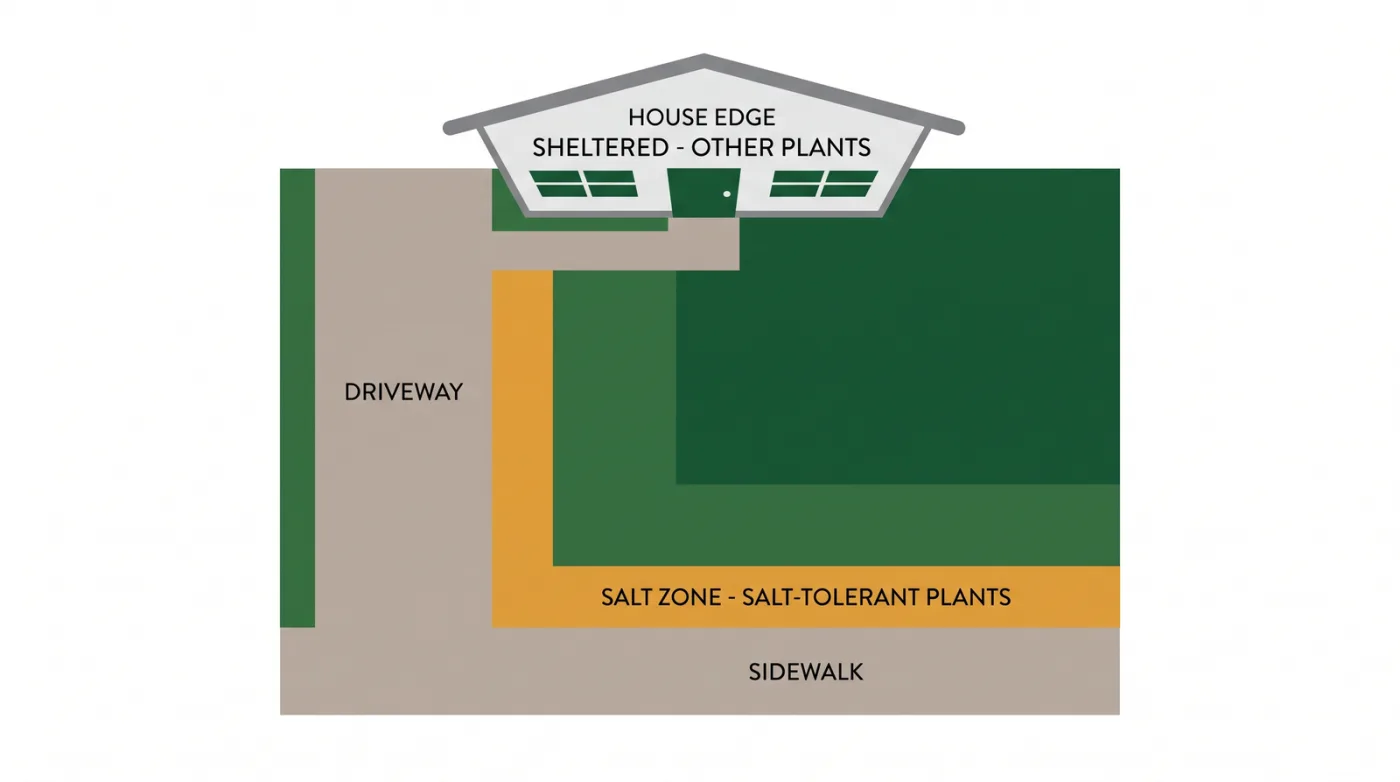
The defining challenge of an Ontario front yard is winter road salt. It sprays off the street and sidewalk and pools along the driveway edge, and it kills or stunts salt-sensitive plants right where you most want them to look good.
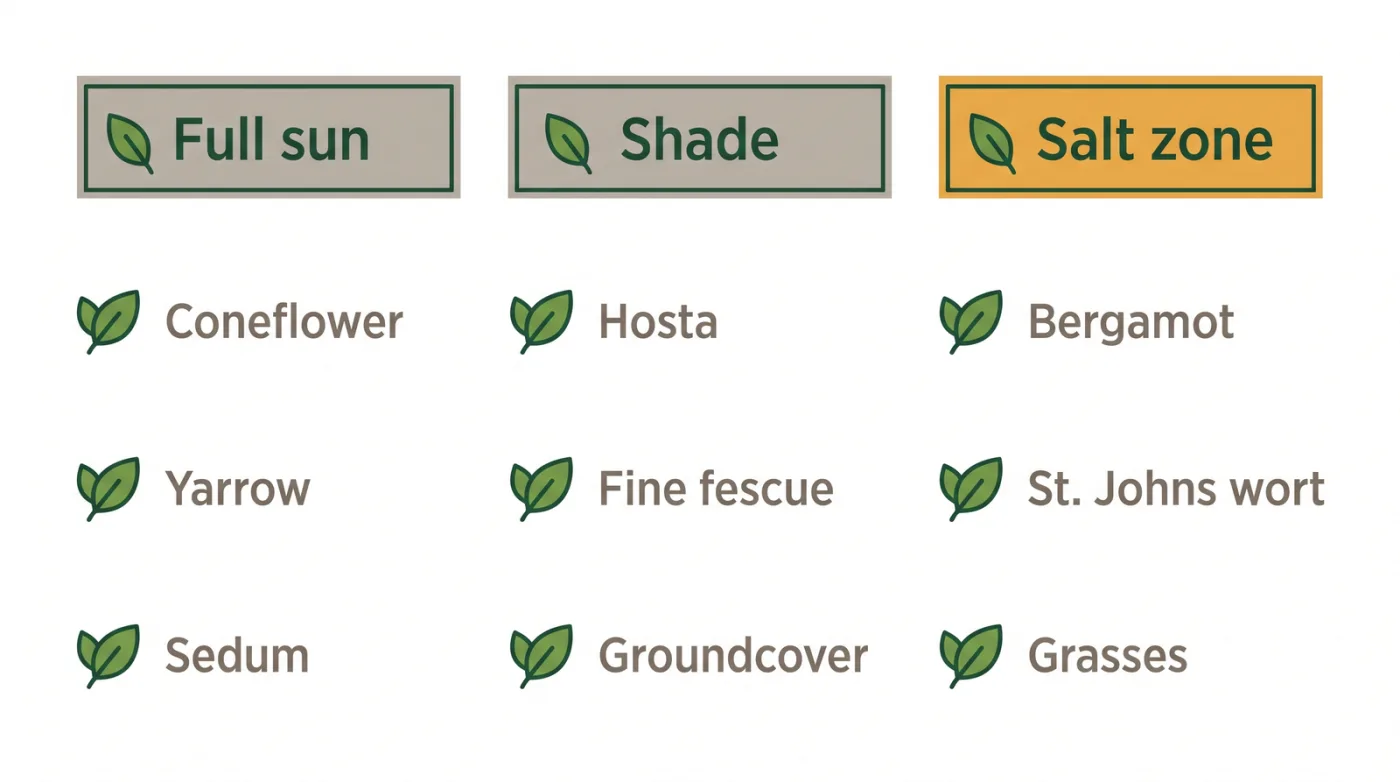
The fix is to zone your planting by salt exposure. Put salt-tough plants in the front line near the curb and driveway, and keep the fussier ones set back. Salt-tolerant, drought-hardy choices include wild bergamot, St. John's wort, yarrow, and ornamental grasses, which shrug off both the salt and the summer dry spells.
Quotable: In an Ontario front yard, winter road salt decides the plant list along the curb and driveway. Salt-tolerant natives like bergamot, yarrow, and St. John's wort survive the strip where salt-sensitive plants die.
Know Toronto's soft-landscaping rule before you hardscape
You cannot pave the whole front yard, and it is worth knowing why before you plan. Toronto's Zoning By-law requires a share of the front yard to stay as landscaping, with the exact share depending on lot width, and 75% of that required landscaped area must be soft, permeable landscaping, soil, gardens, or grass (City of Toronto).
Soft landscaping — permeable ground made of soil, mulch, or grass that can support trees, shrubs, and plants, as opposed to hard surfaces like pavers or concrete. Artificial turf does not count as soft landscaping in Toronto.
This is not just red tape; permeable ground also lets rain soak in instead of running off, which matters on Toronto's clay lots. If you are considering a parking pad or a wider driveway, our guide to front-yard parking pads in Toronto covers the approvals.
Layer the planting for curb appeal
The difference between a flat lawn and a front yard people notice is layering. Build the beds, especially the foundation planting along the house, in tiers of height.
- Low edge. Groundcovers and low perennials at the front of the bed to soften the line to the lawn or walkway.
- Mid-height. Flowering perennials, black-eyed Susan, coneflower, catmint, for colour and pollinators.
- Structure. One small tree or feature shrub, such as serviceberry or ninebark, to give the yard height and a focal point.
Group plants in odd-numbered clusters, and repeat a few key plants across the yard so it reads as designed rather than random. This layered look costs less than a big lawn to maintain and delivers far more curb appeal.
From the data: YardQuote tracks 650 landscaping companies and 209 landscape-design firms across the GTA (YardQuote tracking, July 2026). For a front yard, a one-time design plan, roughly $300 to $900 for a small garden, often pays for itself by preventing the scattered, replace-it-yearly planting that never quite looks finished.
Define the walkway
A clear, well-built front walkway anchors the whole yard and makes it feel intentional. An interlock walkway runs about $16 to $32 per square foot installed in the GTA (July 2026, before HST), and a proper base matters as much as the surface because Toronto's freeze-thaw heaves a walkway built on poor prep.
Keep the path generous enough for two people and gently curved or straight to suit the house. For ideas on materials and layouts, see our front walkway ideas for Toronto and the front yard landscaping cost breakdown.
Turn it into a pollinator garden (and maybe a funded one)
A native front garden is low-maintenance and good for local pollinators, which are in decline. Toronto's PollinateTO program even offers grants for qualifying pollinator gardens, including front-yard gardens that replace turf with native plants (City of Toronto).
Qualifying gardens must meet requirements such as 75% native perennial species, at least twelve perennial plants, a native goldenrod, and larval host plants like milkweed. If you were going to plant a native front garden anyway, it is worth checking whether it can be partly funded.
Build a front yard that lasts
The Ontario front yard that still looks good after a hard winter is the one designed for salt, drainage, and the local rules from the start, not the one with the most expensive lawn. Zone for salt, layer the planting, define the walkway, and keep enough soft landscaping to satisfy the by-law and your clay soil.
Compare current ranges on the landscaping cost page or browse vetted local pros in the landscaping directory for North York when the project is bigger than a weekend.
Want a front yard designed for Ontario winters and priced honestly? Request a quote and compare up to three vetted local pros side by side. Your contact details only go to the one you pick, and a good pro plans for the salt before the snow flies.