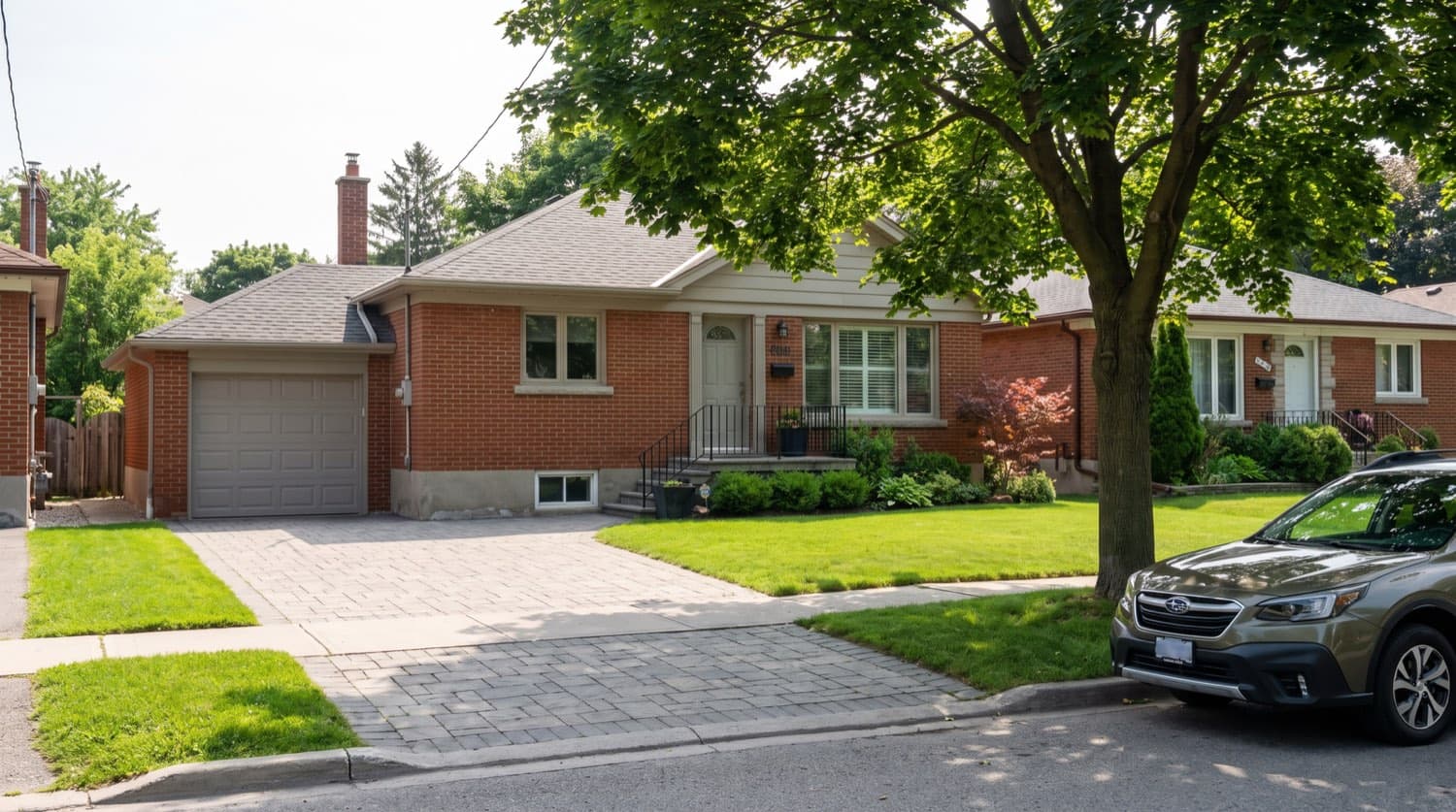
Answer First: Widening a driveway or cutting a new curb in Toronto is a City-permitted job, not a DIY one. Because widening touches the boulevard, sidewalk, or curb, all City property, you need a street work permit from Transportation Services first, a City-licensed paving contractor, refundable financial security, and at least eight weeks' lead time. A new curb cut is installed only by City crews at your cost. And in much of the former City of Toronto, front-yard parking is banned outright under Municipal Code Chapter 918, so approval is far from guaranteed.
Homeowners assume a driveway is entirely theirs to change. The part that meets the road is not. That single fact, that the boulevard and curb belong to the City, drives every rule below.
Do you need a permit to widen a driveway in Toronto?
Yes, whenever the work crosses City property, which widening almost always does. The strip between your property line and the road, the boulevard, sidewalk, and curb, is City-owned, so altering how your driveway meets it requires approval.
The dividing line is simple: resurfacing your existing driveway in its current footprint needs no permit, but changing its width or adding a new curb cut needs zoning compliance plus a street work permit from Transportation Services before any work starts (City of Toronto).
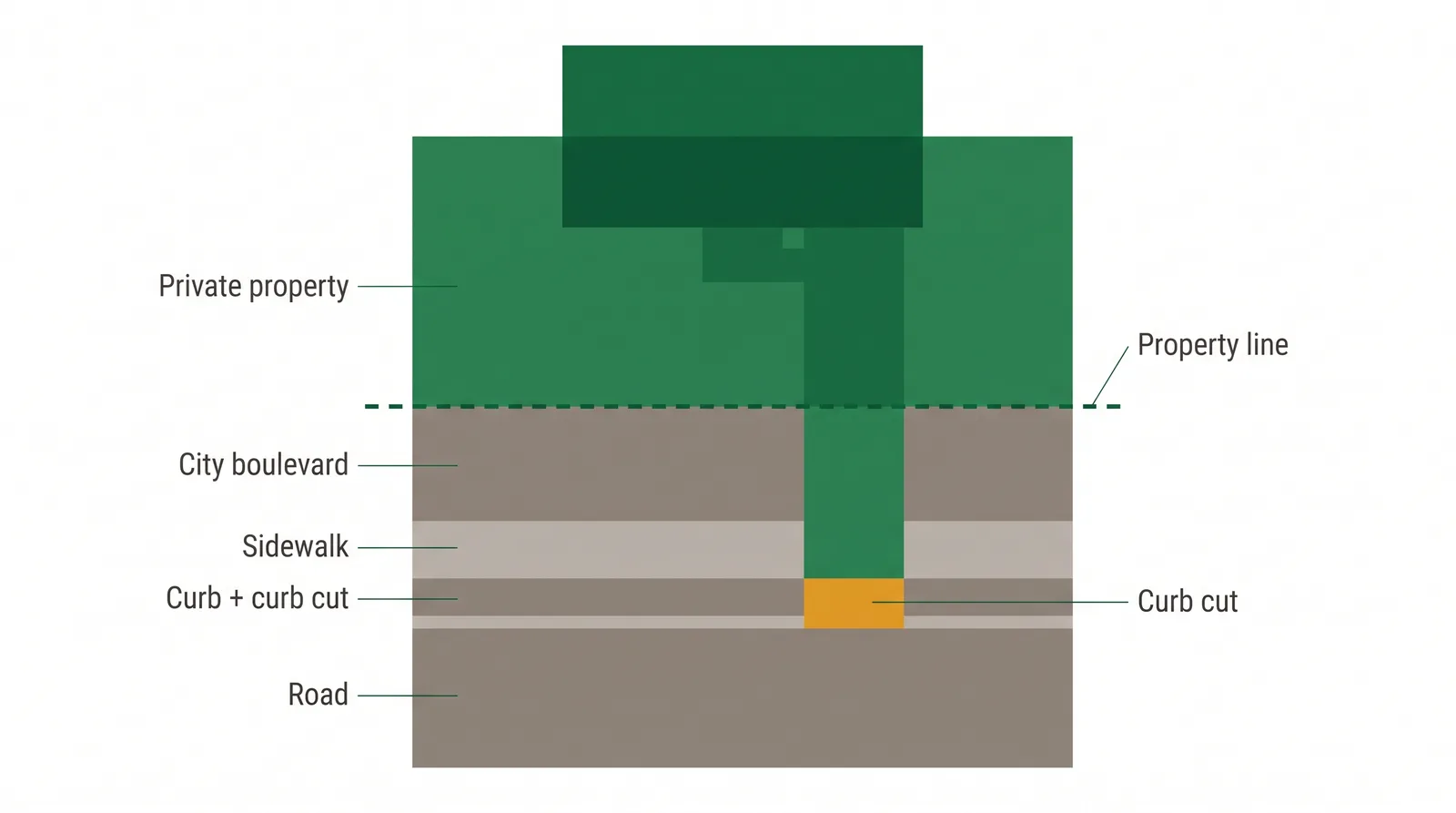
Quotable: In Toronto, your driveway is private only up to the property line. The boulevard, sidewalk, and curb it crosses to reach the road belong to the City, so widening a driveway or cutting a curb is City-permitted work, not a homeowner's call.
What a curb cut is, and who installs it
Curb cut (or curb ramp) — the lowered section of street curb that lets a vehicle roll from the road onto a driveway.
Because the curb is City infrastructure, you cannot have your landscaper cut it. You apply to Transportation Services for the curb cut, the City provides a cost estimate, and City contractors perform and warranty the installation, which you pay for. This is non-negotiable: only City crews touch the City curb, so a curb cut is a line item you order from the City, not from your paving contractor.
Can you even get front-yard parking?
This is the question to answer before you spend a dollar on design, because the answer is often no.
Front-yard parking is governed by Municipal Code Chapter 918, and in parts of the former City of Toronto it is prohibited outright, Transportation Services will not accept new applications in those wards (Toronto Municipal Code Chapter 918). Where it is permitted, approval still depends on your zoning, your lot, and whether a legal parking space and a compliant curb cut can actually be provided.
From the data: Across the interlocking contractors YardQuote tracks in the GTA, the driveway jobs that stall are rarely about the paving, they are about eligibility. A beautiful widening plan is worthless if your address sits in a Chapter 918 no-parking ward. Confirm eligibility with the City first, then call a contractor.
The front-yard landscaping rule and the tree
Even where front-yard parking is allowed, Toronto will not let you pave the whole yard. Under the City's zoning by-law, part of your front yard must stay landscaped, and the required share depends on your lot's frontage, with many lots required to keep about half the front yard as landscaping. Of that required landscaped area, at least 75% must be soft landscaping, living plants, grass, or gardens (City of Toronto). Crucially, artificial turf does not count as soft landscaping, so you cannot fake a green lawn to get around it. This is a frequent reason parking and widening plans get scaled back or refused.
Front-yard parking approvals also require planting or funding a City tree, about $986 in 2026 (no HST). Permeable pavers help too: they count more favourably toward drainage and are treated better in approvals because they protect street trees.
The permits, conditions, and fees
Widening or adding parking is a stack of requirements, not a single permit. Here is what to budget for.
| Item | What it is | Cost |
|---|---|---|
| Street work / paving permit | Required to build across City property; needs metric-scale drawings | City-set permit fee (confirm current amount) |
| Financial security | Refundable deposit ensuring work matches approved plans | Refunded when work is verified |
| Curb cut installation | City crews cut and warranty the curb | City provides estimate; you pay it |
| Front-yard tree | Plant or fund a City tree | ~$986 (2026, no HST) |
| Boulevard parking licence (if renting City space) | Annual licence to park on the boulevard | $514.41 + HST to apply; $331.13 + HST/year |
Two notes matter here. The street work permit requires a City-licensed driveway paving contractor and drawings drawn to metric scale, and the boulevard parking licence does not transfer when you sell, a new owner must reapply. The interlock or asphalt work itself is a separate cost on top of all of this.
How to apply, in order
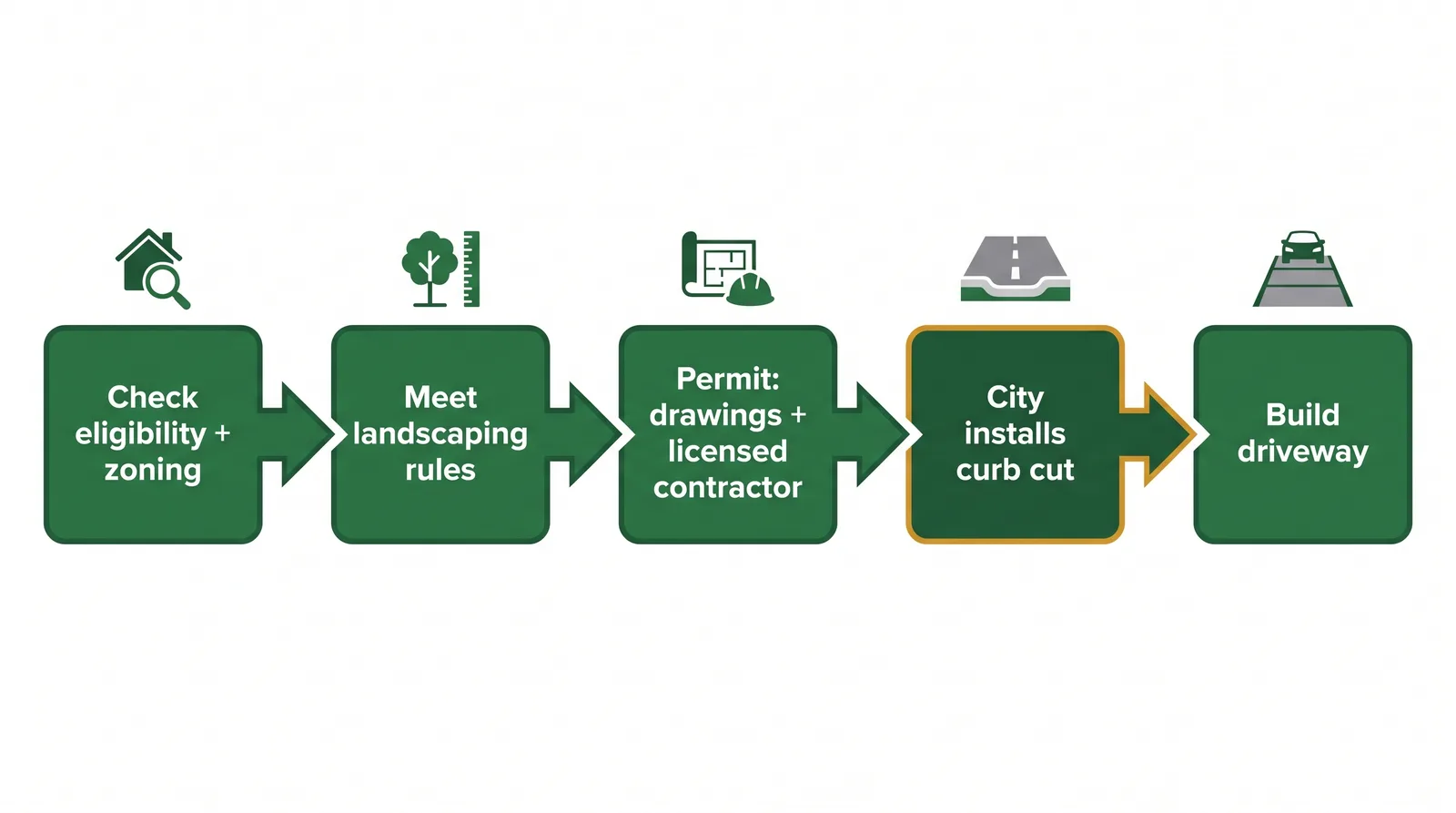
Do these in sequence, because getting them out of order wastes money.
- Check eligibility first. Confirm your address is not in a Chapter 918 no-parking ward and that your zoning allows the parking space. Call 311 or Transportation Services before anything else.
- Check the landscaping math. Your plan must keep the front yard's required landscaped share, and at least 75% of that landscaped area must be soft, not pavement and not artificial turf, or it will not pass.
- Prepare drawings and line up a City-licensed paving contractor. Applications need metric-scale drawings and a licensed contractor for the driveway work.
- Submit at least eight weeks ahead with the financial security. Build in that lead time, the City needs it.
- Order the curb cut from the City and pay the installation estimate; City crews do it.
- Build the driveway once approvals and the curb cut are in place.
The paving itself is the easy part, and comparing those quotes follows the same logic as any hardscape job, covered in why Toronto quotes vary and in choosing a surface in flagstone versus interlocking pavers. See current driveway ranges on the interlocking cost page or compare rated crews on the interlocking directory for your area.
Ready to price the driveway once your approvals are lined up? Request a quote and compare up to three vetted local pros side by side, all working to the City's rules. Your contact details only go to the one you pick.