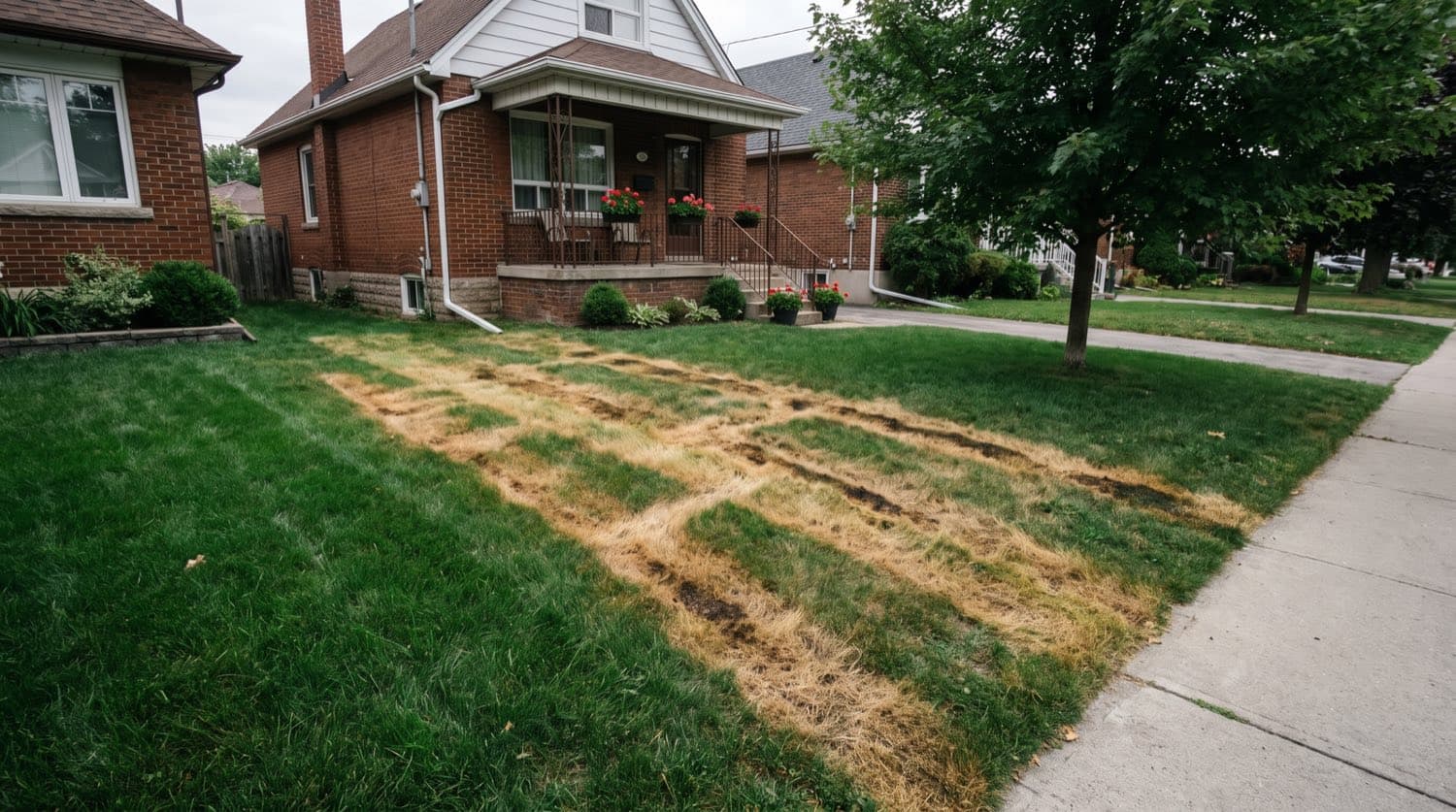
Answer First: Yes, you can over-fertilize a lawn, and it burns within days. Too much nitrogen acts like salt and pulls moisture straight out of the grass, leaving brown or yellow streaks in your spreader pattern and a white crust on the soil (University of Maryland Extension). The safe cap is 1 pound of actual nitrogen per 1,000 square feet per feeding, and about 0.7 pound if it is quick-release. If the roots are still white, deep watering flushes the salt and the lawn greens back in 2 to 4 weeks.
More fertilizer does not mean a greener lawn. Past a point it means a scorched one, and the pattern gives it away: the burn traces exactly where you pushed the spreader, heaviest on the turns and the overlap where you doubled up.
What does an over-fertilized lawn look like?
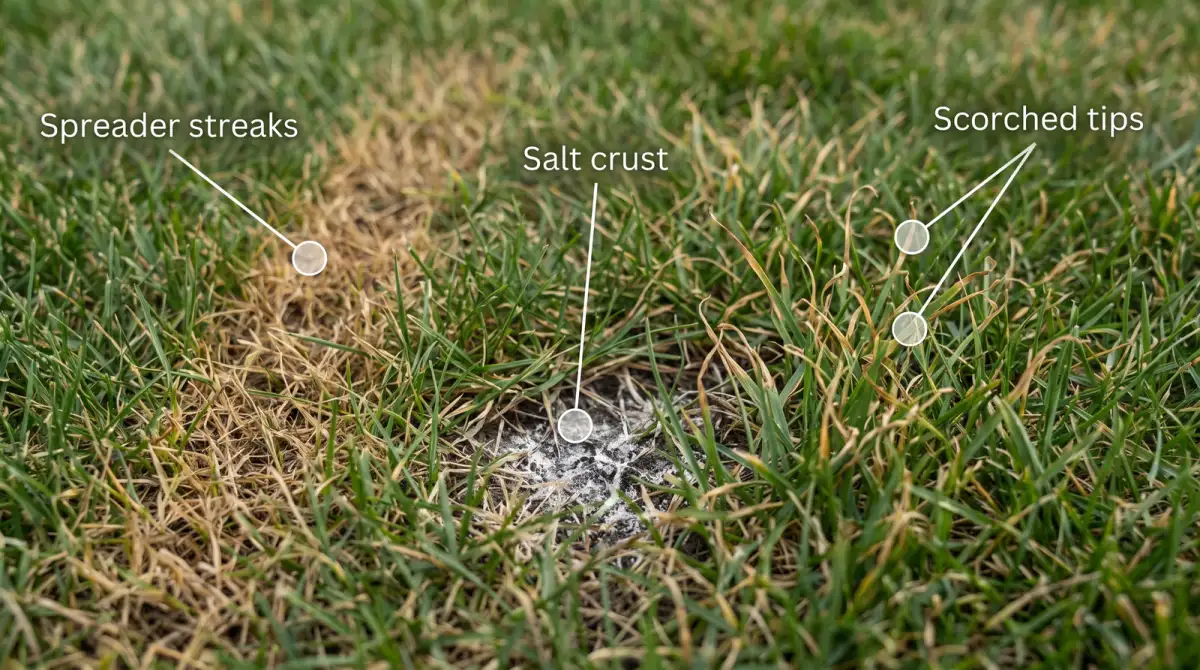
The signature sign is brown or yellow scorching that follows your spreader path, not random patches. Nitrogen burn shows up as streaks and stripes because it lands where the fertilizer landed, so a heavy pass or an overlapped turn burns while the grass beside it stays green.
Three signs together confirm it, versus disease or drought:
- Streaked or striped scorching in the shape of your spreader route, worst on turns and overlaps.
- A white or grey salt crust left on the soil surface after watering, which is the fertilizer salt the grass could not absorb.
- Grass tips browning first, then whole blades, sometimes within a day or two of feeding.
Drought browns a lawn evenly or on the high, sunny spots. Fungal disease makes rings or irregular blotches. Fertilizer burn is the one that draws lines.
Quotable: Fertilizer burn browns a lawn in the exact stripes of the spreader pattern, heaviest on turns and overlaps, and leaves a white salt crust on the soil. Drought and disease damage never follows a spreader route.
Why does too much fertilizer burn grass?
Fertilizer is a salt, and salt draws water out of whatever it touches. When you put down more nitrogen than the roots can take up, the excess raises the salt level in the soil, and water moves the wrong way, out of the grass roots instead of into them (University of Maryland Extension). The blades dry out and scorch even though the ground is damp.
Fertilizer burn — root and blade damage caused by applying more fertilizer salt (usually nitrogen) than the soil can hold, which pulls moisture out of the grass by osmosis and scorches it, regardless of how much you water afterward.
This is why quick-release fertilizer is riskier than slow-release. A quick-release product dumps all its soluble nitrogen at once, spiking the soil salt level, while a slow-release or controlled-release product feeds it out over six to eight weeks and keeps the salt concentration low the whole time.
How much fertilizer is too much?
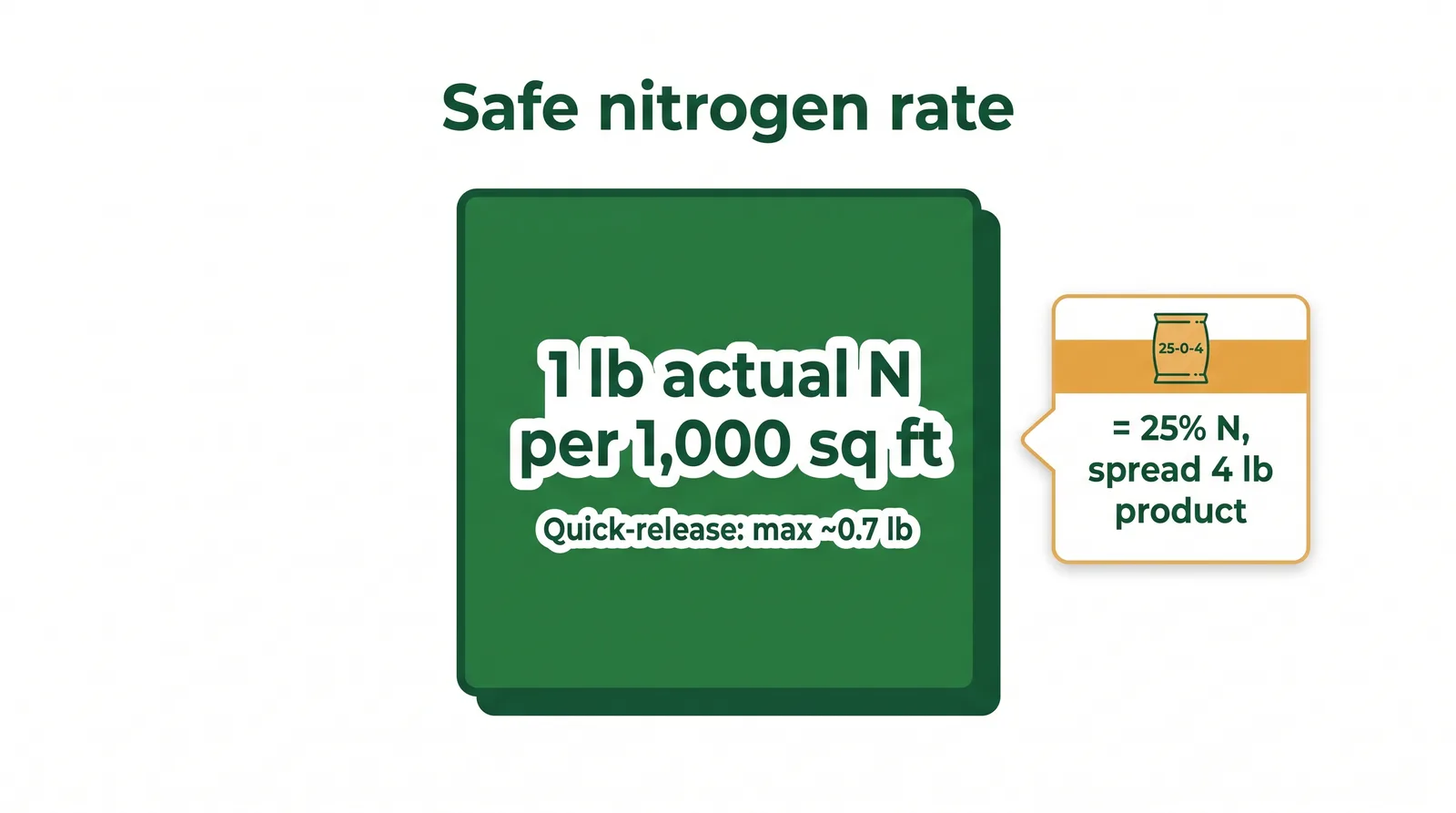
Never apply more than 1 pound of actual nitrogen per 1,000 square feet in one feeding, and cap quick-release products at about 0.7 pound (University of Connecticut; Clemson). That single number drives every safe fertilizer decision.
The math is simpler than it looks. The first number in the three-number analysis on the bag is the nitrogen percentage. A 25-0-4 bag is 25% nitrogen, so to put down 1 pound of nitrogen you spread 4 pounds of product across 1,000 square feet. Two ways homeowners blow past the cap:
- They skip the math and just fill the spreader, so a small city lawn gets two or three times the safe rate.
- They double-feed, laying down a spring product and a "greening" product a week apart, which stacks the nitrogen the grass has not used yet.
How do you fix a burned lawn?
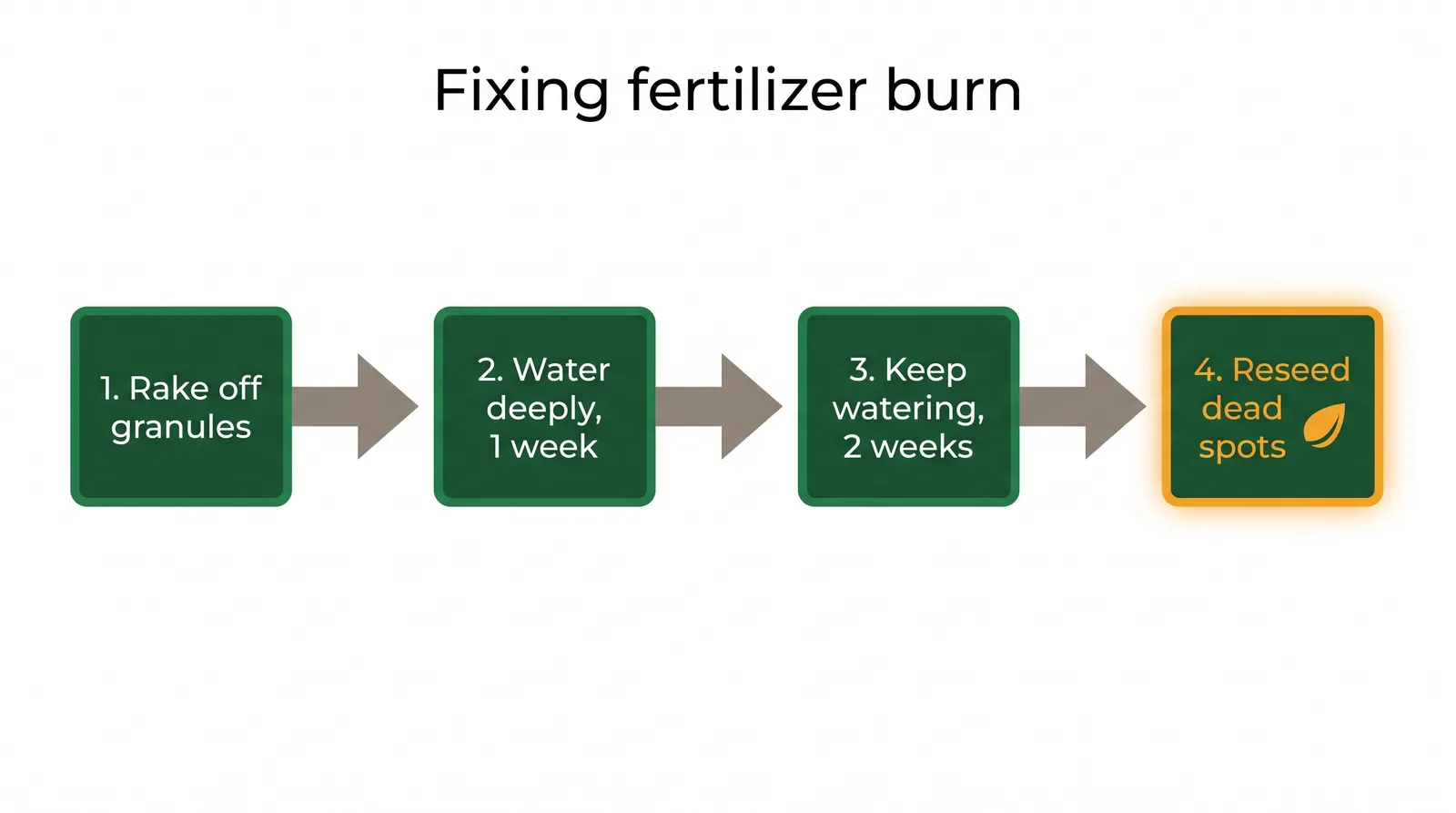
Flush the salt out with water, then give the grass time. Watering is the actual repair here, because the problem is too much salt in the soil and water is what moves it below the roots.
- Rake off loose granules. If you can see undissolved fertilizer, sweep or rake it off the burned area so it stops dissolving into the soil.
- Water deeply and daily for the first week. Soak the burned zone every day for three to seven days to dilute and push the salt down past the root zone (University of Maryland Extension).
- Keep watering for two weeks. Taper to every couple of days. Healthy grass with firm white roots pushes new growth in two to four weeks.
- Reseed the dead spots. Pull a tuft: brown, mushy roots mean that patch is gone, and it needs fresh seed once the salt is flushed. In the GTA, early fall is the best window to reseed cool-season grass.
- Do not feed again until the lawn has fully recovered, and then only at the safe rate.
From the data: YardQuote tracks 249 lawn-care companies across the GTA, 220 of them with three or more reviews at an average of 4.75 stars (YardQuote tracking, July 2026). Many run measured, multi-visit fertilizer programs specifically so the rate is calculated to your lawn's size rather than guessed at the spreader, which is the single easiest way to avoid burn.
How do you avoid over-fertilizing in the GTA?
Time it right and let the product do the work. Toronto's cool-season lawns, mostly Kentucky bluegrass and fescue, want feeding in spring and fall, not in the July and August heat when the grass slows down, cannot use the nitrogen, and scorches easily. The most valuable feeding of the year is a fall application before the ground freezes.
A few habits keep you under the cap for good:
- Choose slow-release. A product with 50% or more slow-release nitrogen spreads the feeding over weeks and is far harder to burn with (University of Connecticut).
- Calibrate the spreader to the bag's setting and walk an even pace, especially on the turns where overlap doubles the dose.
- Never feed a dormant or drought-stressed lawn. Brown, crunchy summer grass cannot take up nitrogen, so fertilizer just sits as salt.
- Keep it off the hard surfaces. Sweep stray granules off driveways and walks back onto the lawn so they do not wash into the storm drain.
One Toronto-specific note: the province's cosmetic pesticide rules limit weed-and-feed products, since the weed-killer half often contains banned ingredients. That is a good thing here, because weed-and-feed also tempts you to over-apply nitrogen chasing weeds. Feed and control weeds as separate steps.
If your lawn burned badly enough to need reseeding, our guide to starting over with grass removal and regrading covers the reset, and you can compare current feeding-program pricing on the lawn care cost page or check fresh sod and seed costs. To find a vetted pro who calculates the rate for you, browse lawn care companies in Scarborough and other GTA areas.
Want a program dialed to your lawn instead of guesswork at the spreader? Request a quote and compare up to three vetted local pros side by side. Your contact details only go to the one you pick.