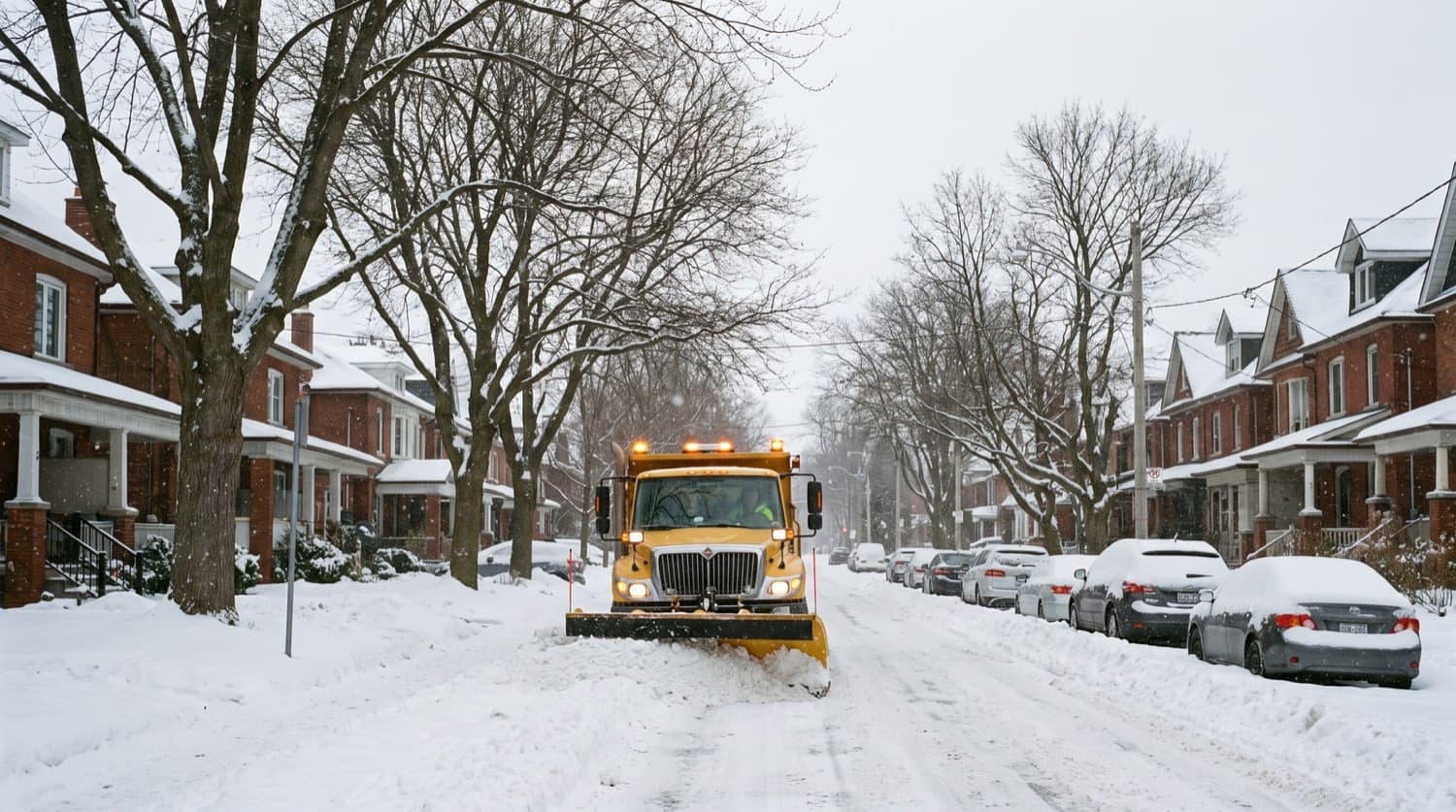
Answer First: Toronto salts every road as soon as snow starts, but only plows once snow passes a trigger depth that depends on the road: 2.5 cm on expressways, 5 cm on major roads, and 8 cm on local residential streets. Your side street is cleared last, up to 14 hours after a storm ends, because it is the lowest priority. You can track plows and salt trucks in real time and see which streets were recently cleared on the City's PlowTO map at toronto.ca/PlowTO.
If your street feels like it is always the last to be plowed, that is not a hunch, it is the design. The City clears roads in a deliberate order, and knowing it, plus how to use the plow tracker, tells you when to expect a clear street.
When does the City plow your street?
The City treats salting and plowing differently. Salt goes down on every road as soon as snow begins to accumulate. Plowing waits for a trigger depth that gets higher as the road gets quieter.
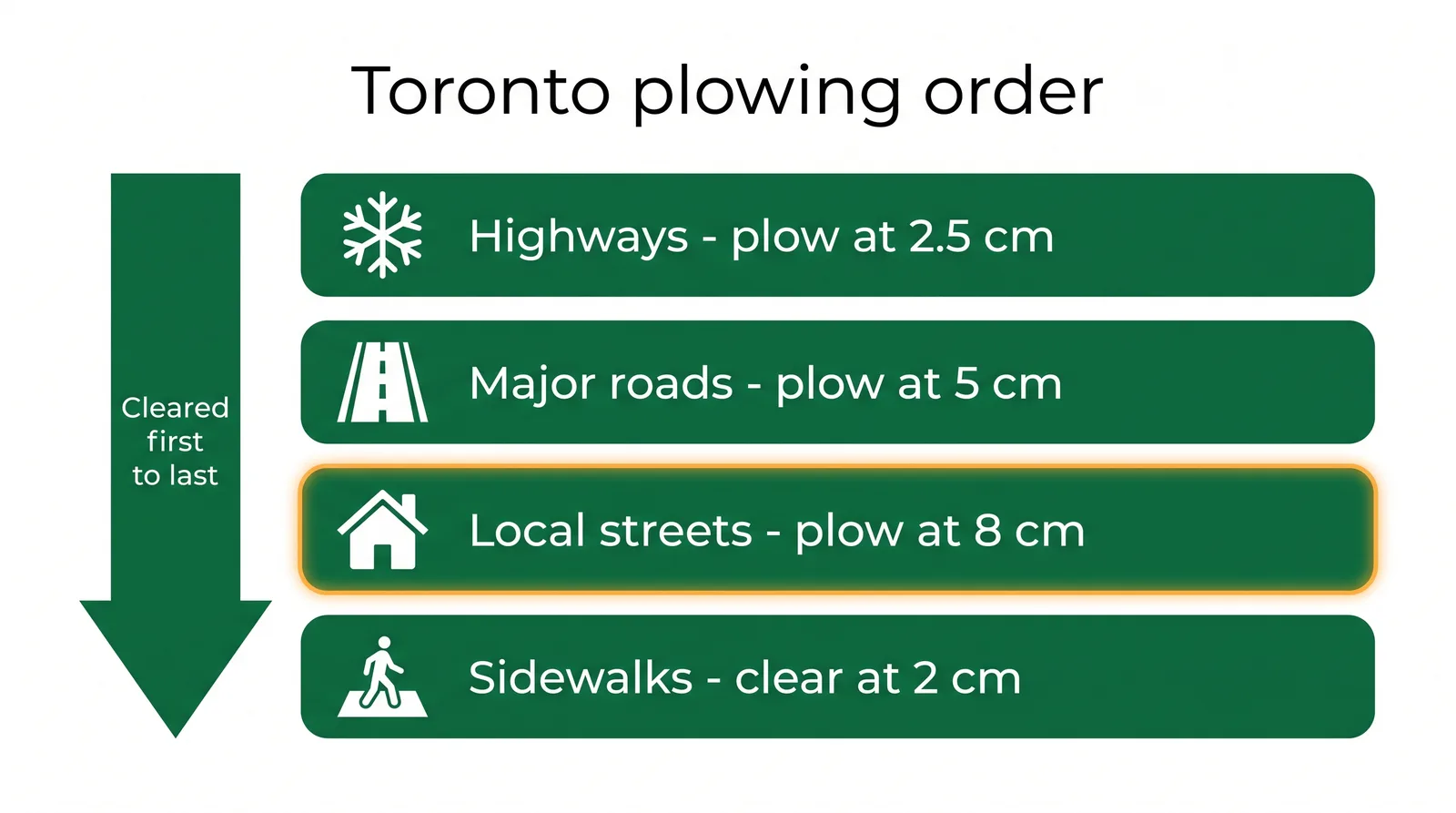
| Road type | Salting starts | Plowing starts |
|---|---|---|
| Expressways (Gardiner, DVP) | When snow accumulates | 2.5 cm |
| Major / arterial roads, transit routes | When snow accumulates | 5 cm |
| Local / residential streets | When snow accumulates | 8 cm |
| Sidewalks, bus stops, crossings | — | 2 cm (cleared) |
So a light 3 cm snowfall gets your local street salted but never plowed, while a 10 cm storm triggers plowing on everything, in priority order.
Quotable: Toronto only plows local residential streets once 8 cm of snow falls, and clears them last, after expressways and major roads. A snowfall under 8 cm may leave your side street salted but never plowed.
Why your local street is cleared last
The order follows traffic and safety, not neighbourhoods. Expressways and major roads carry the most vehicles, transit, and emergency traffic, so they come first and get the fastest standards. Local residential streets, which carry the least traffic, are the final priority. It is not that your street is forgotten; it is that a fixed, city-wide sequence puts it at the end by design.
How long after a storm until it is cleared?
The City publishes maximum clearing times by road type, measured against the storm. Bigger storms mean more rounds and the upper end of these ranges.
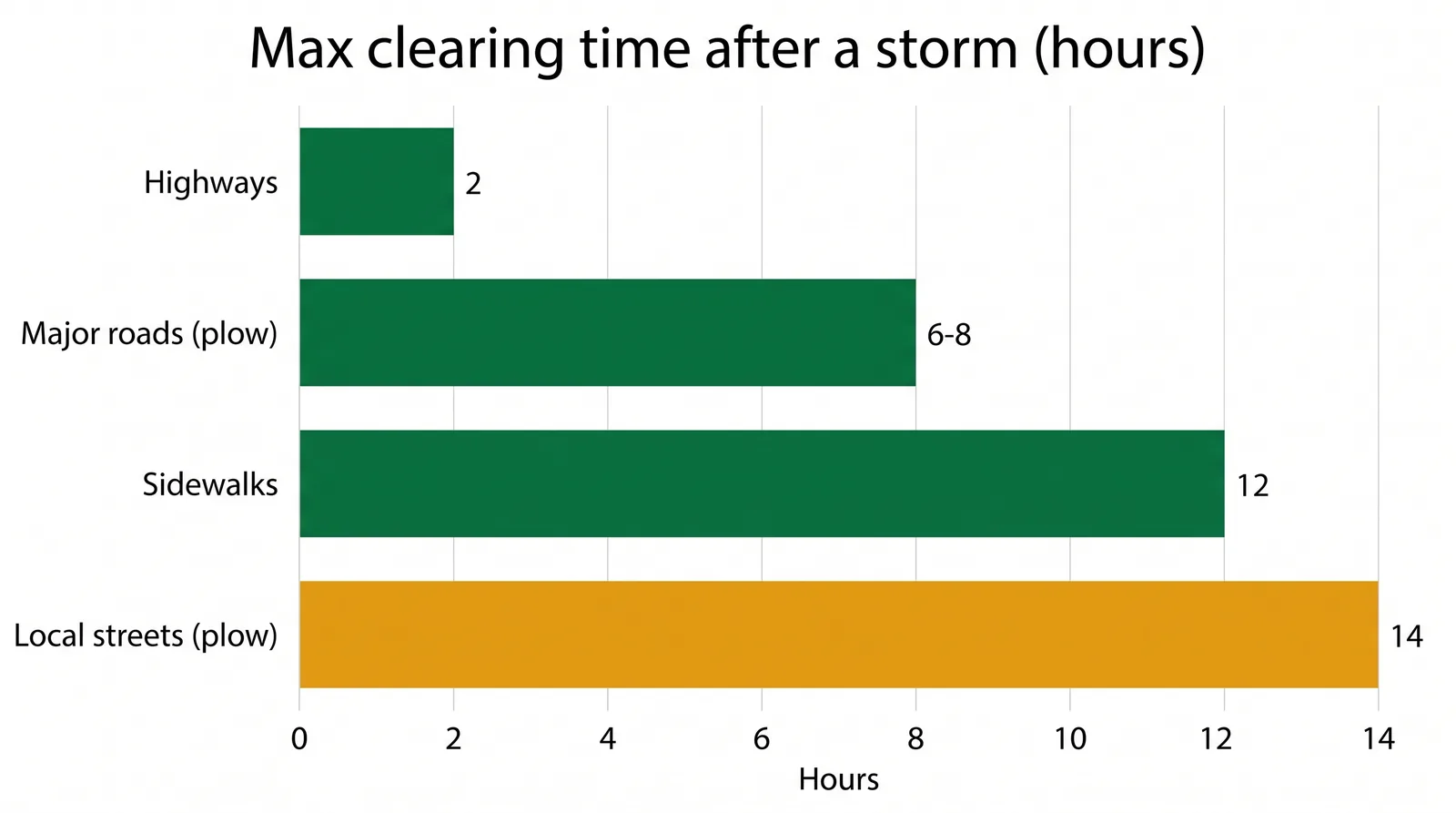
- Expressways: about 2 hours.
- Major roads: roughly 4 hours to salt, 6 to 8 hours to plow.
- Local residential streets: about 8 hours to salt, up to 14 hours to plow.
- Sidewalks: within about 12 hours of 2 cm accumulating.
- Laneways: within 24 hours from the end of snowfall.
That 14-hour local-street window is why your side street can still be snow-covered the morning after an overnight storm, even as the main roads run clear.
What the PlowTO tracker shows
Instead of guessing, you can watch. PlowTO is the City's online map, at toronto.ca/PlowTO, that shows the real-time locations of plows and salt trucks and which streets have recently been serviced.
During a storm, it answers the two questions you actually have: has my street been cleared, and is a plow nearby. It covers the City's road and sidewalk operations, so you can check both. One seasonal note: PlowTO goes offline over the summer for maintenance and returns when winter snow-clearing operations begin, so it is a tool for the season, not year-round.
From the data: The City's winter fleet runs more than 1,400 vehicles on 24/7 standby through the season. PlowTO turns that invisible operation into something you can see, which is the difference between "why hasn't my street been plowed" and "the plow is two streets over and my road is next."
Sidewalks, windrows, and what is still your job
The City does a lot, but not everything at your address. It clears roughly 98% of sidewalks mechanically for all residents once 2 cm falls, and it clears the windrow, the ridge a plow leaves across driveway ends, on eligible streets in parts of North York, Scarborough, and Etobicoke, about 262,000 households. In the older core, the windrow is the homeowner's job.
Your legal duties do not go away because the City is working. You must clear the public sidewalk next to your property within 12 hours after snow stops, and your driveway, steps, and ramps within 24 hours. Hiring that out is where a private contractor comes in, and the same market and pricing logic applies as in our guides to what a seasonal snow contract includes and plowing versus blowing versus shovelling. See current GTA ranges on the snow removal cost page or compare rated crews on the snow removal directory for your area.
Want your own driveway and walkway handled while the City works the roads? Request a quote and compare up to three vetted local pros side by side. Your contact details only go to the one you pick.