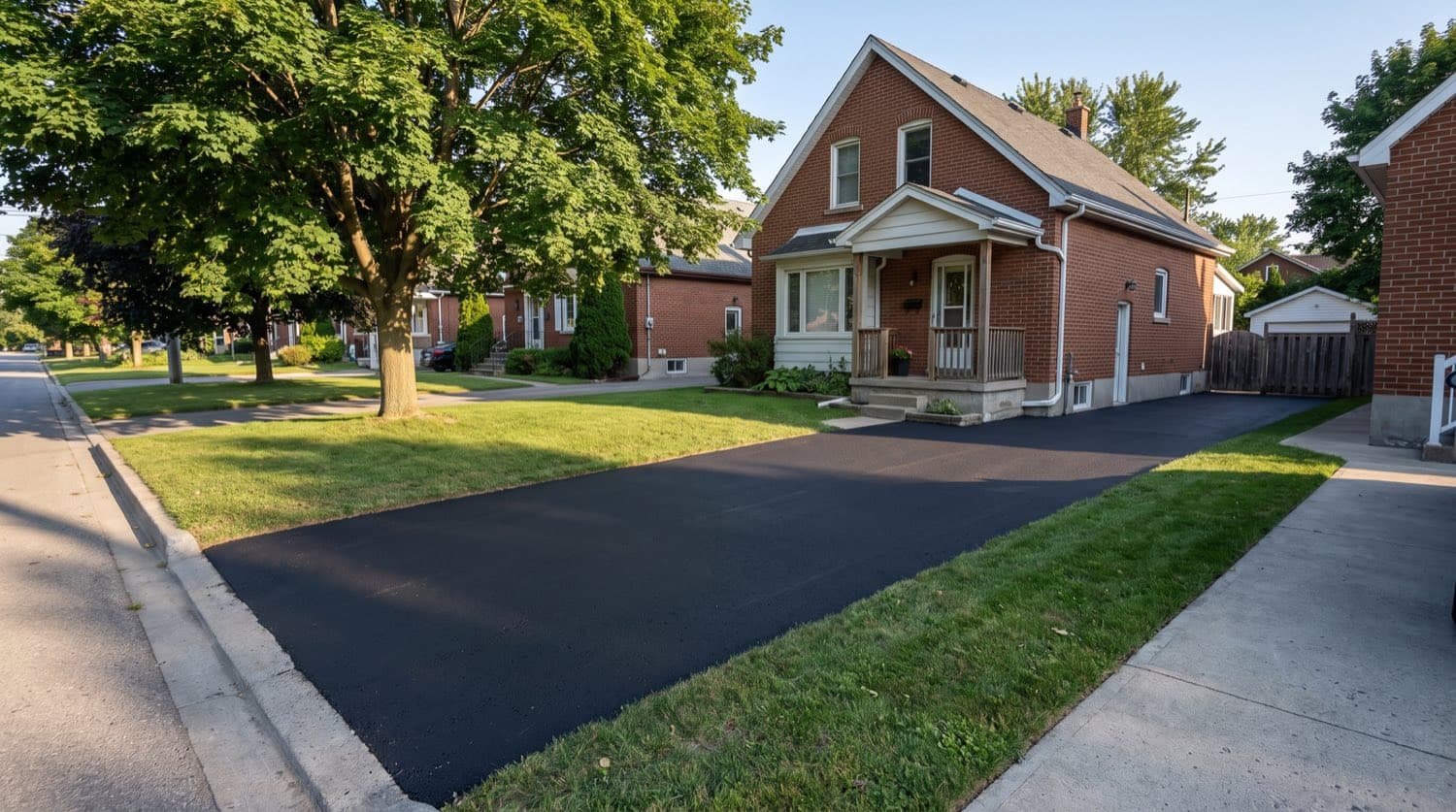
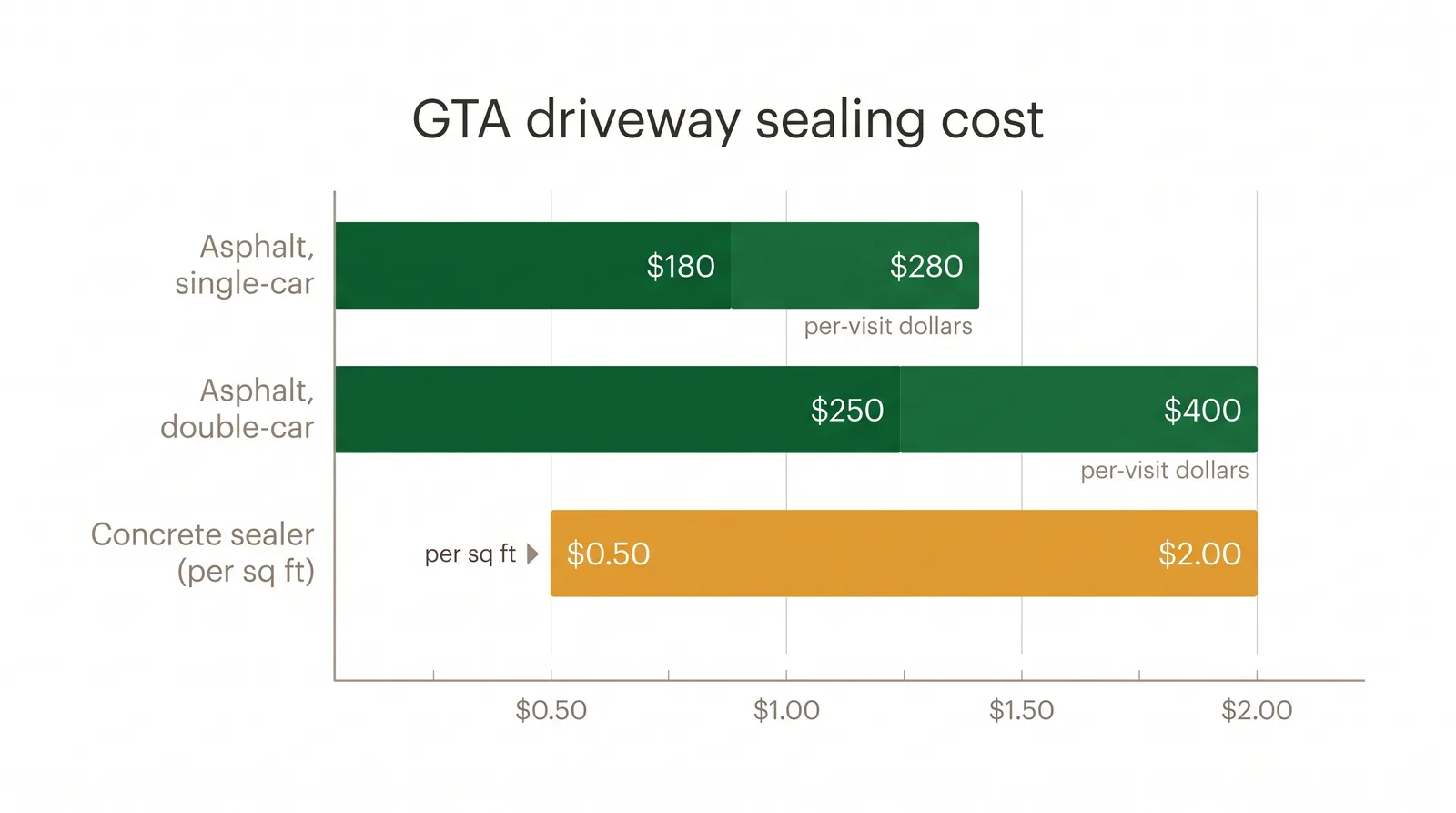
Answer First: Sealing a standard double-car asphalt driveway in the GTA costs $250 to $400 per visit (up to about 800 sq ft), and a single-car driveway runs $180 to $280 (Cedarwood Development). Concrete sealer is priced by area at $0.50 to $2.00 per square foot. Reseal every 2 to 3 years, and the reason it is worth it is simple: a $300 coat is what turns a 15-year asphalt driveway into a 25 to 30-year one.
Sealing is the rare landscaping line where the cheap option is also the right one. The whole job costs less than a single winter of salt damage, yet it is the one maintenance step most Toronto homeowners skip until the surface is already cracking. By then, sealer cannot save it.
How much does it cost to seal a driveway in Toronto?
A double-car asphalt driveway costs $250 to $400 to seal, with about $325 as the typical GTA rate for up to 800 square feet (Cedarwood Development). A single-car driveway runs $180 to $280. Concrete is priced differently, by the square foot, at $0.50 to $2.00.
Those two pricing models trip people up, so line them up directly. Asphalt sealing is usually a flat rate by driveway size, which works out to roughly $0.30 to $0.50 per square foot on a typical double. Concrete sealer is quoted per square foot from the start, $0.50 to $1.00 for a standard sealer and $1.00 to $2.00 for the anti-slip sealer that stamped surfaces need to stay safe when wet (Nice Guy Concrete). All of these are before Ontario's 13% HST, which most GTA contractors quote separately.
Quotable: Sealing a double-car asphalt driveway costs $250 to $400 per visit in the GTA (up to 800 sq ft); concrete sealer runs $0.50 to $2.00 per square foot, with the top end for anti-slip sealer on stamped concrete.
How often should you seal a driveway in the GTA?
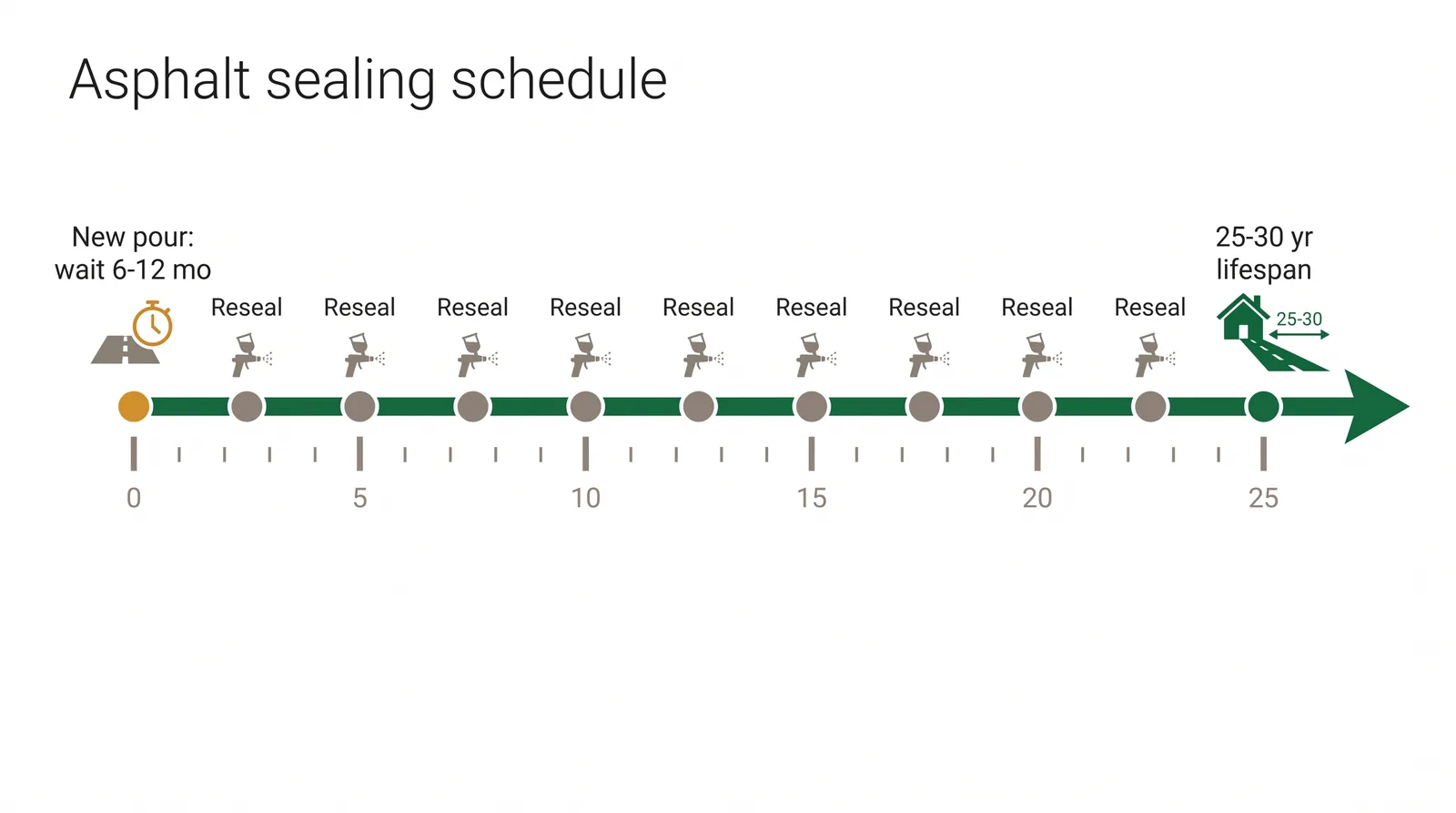
Every 2 to 3 years for both asphalt and concrete, and never sooner than 6 to 12 months after a new asphalt driveway is poured. That first-year wait matters: fresh asphalt needs time for its surface oils to cure before a sealcoat traps them (Green Building Canada).
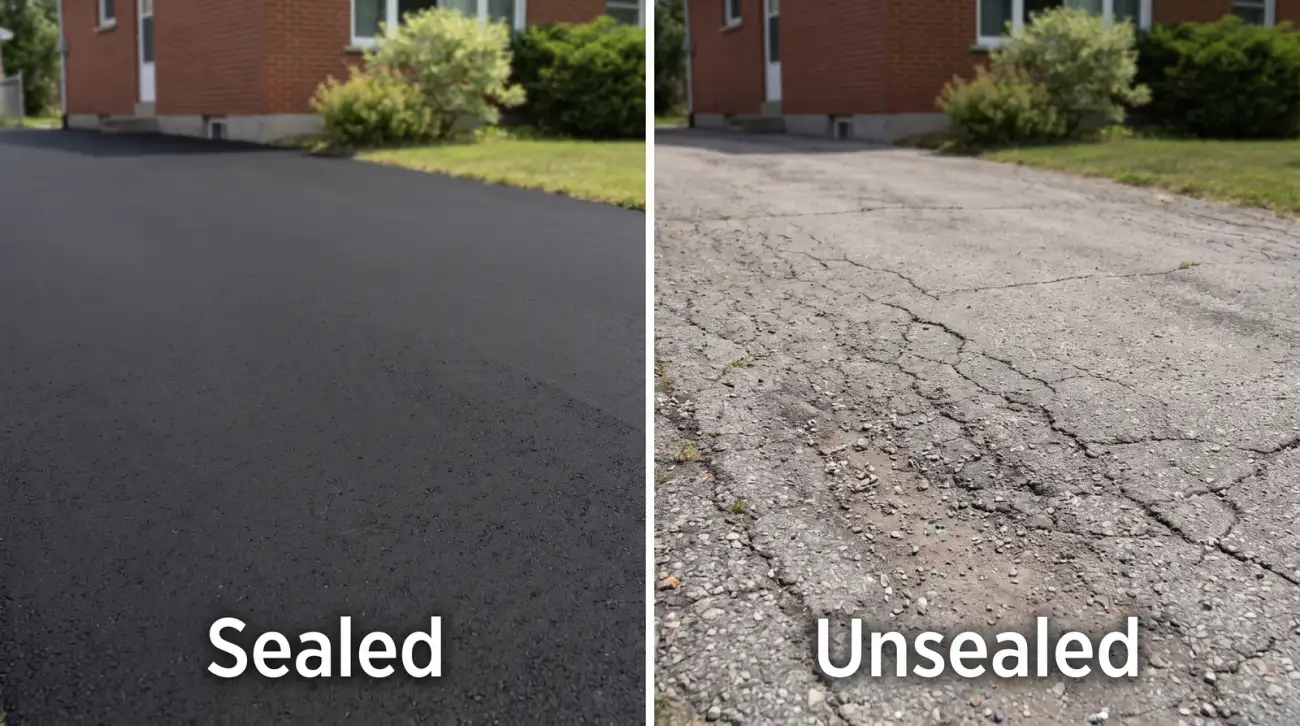
Toronto's climate sets the schedule, not the calendar. Water seeps into small surface cracks, freezes, expands, and pries them wider every winter, and road salt speeds the breakdown. Sealer fills those hairline cracks and puts a waterproof layer between the freeze-thaw cycle and the base underneath. Seal too often and you are paying for coats that have not worn off yet. Wait too long, past about three years, and water reaches the gravel base, which is the damage sealer cannot reverse.
Sealcoating — a thin protective liquid coat rolled or sprayed over asphalt (or a clear penetrating sealer on concrete) that blocks water, oil, and salt from reaching the surface and base, slowing the freeze-thaw cracking that otherwise shortens a driveway's life.
Is sealing a driveway actually worth it?
For asphalt, the math is one-sided. Sealing on schedule is the difference between a driveway that lasts 15 years and one that lasts 20 to 30 (GTA Sunrise). A new asphalt driveway costs $3,000 to $7,000 for a typical two-car size, so spending $250 to $400 every couple of years to nearly double its life is the cheapest return in the whole driveway budget.
Quotable: Sealing an asphalt driveway every 2 to 3 years is the difference between a 15-year surface and a 25 to 30-year one, so a $250 to $400 coat defers a $3,000 to $7,000 repave.
Put over a full lifespan, total 20-year ownership of a 500 sq ft asphalt driveway is about $4,500 including sealing and minor repairs (Project Landscaping), the lowest running cost of any paved surface. Skip the sealing and you are not saving that money, you are trading it for a repave years early.
From the data: Sealing is the cheapest line in YardQuote's entire driveway dataset. A double-car sealcoat at $250 to $400 costs a fraction of the $3,000 to $7,000 to repave the same driveway, and it is the single maintenance step that decides whether an asphalt surface reaches 15 years or 30.
Concrete is a similar story with a safety angle. Freeze-thaw and de-icing salt are the dominant failure mode for GTA concrete, and stamped concrete only reaches its 25-year lifespan when resealed every 2 to 3 years (Nice Guy Concrete). On stamped surfaces the anti-slip sealer is not optional either, because a smooth stamped pattern gets dangerous when wet.
Asphalt sealer or concrete sealer: what is the difference?
They protect different surfaces against the same enemy, and they are not interchangeable. Choosing the wrong product, or letting a contractor use a generic coat, wastes the money.
| Factor | Asphalt sealcoat | Concrete sealer |
|---|---|---|
| Typical cost | $250 to $400 double-car | $0.50 to $2.00 per sq ft |
| Reseal interval | Every 2 to 3 years | Every 2 to 3 years |
| First application | 6 to 12 months after pour | After curing (about 28 days) |
| What it does | Fills surface cracks, blocks water and salt | Penetrates pores, blocks salt scaling |
| Special case | N/A | Anti-slip sealer needed on stamped ($1 to $2/sq ft) |
The practical takeaway is to match the sealer to the surface and confirm the interval. An asphalt coat is a resurfacing film; a concrete sealer soaks in. Both need redoing on the same 2-to-3-year clock in Toronto, but concrete on stamped or exposed-aggregate finishes needs the specific sealer that keeps the texture from turning slick.
How do you avoid overpaying to seal a driveway?
Sealing is cheap, so the goal is not to shave dollars off the coat but to make sure you are buying a real one. A $150 driveway sealcoat that skips cleaning and crack prep wears off in a season and costs you the redo. Run any quote through four checks.
- Confirm the prep. A proper sealcoat includes cleaning the surface and filling visible cracks first. A bid that is only the coat, with no prep, is buying a thin film over dirt.
- Check the interval, not just the price. A pro who tells you to reseal yearly is either using a weak product or padding future visits. Two to three years is the honest schedule in the GTA.
- Match sealer to surface. For stamped or exposed-aggregate concrete, confirm the anti-slip sealer at $1 to $2 per square foot, not a generic driveway coat.
- Get the HST right. At 13%, a $350 seal is really $396 out the door. Confirm each quote is stated the same way before comparing.
Once prep, interval, product, and tax are lined up, price is a fair comparison, and review history breaks the tie. YardQuote tracks 503 interlocking and paving contractors across the GTA, and 464 of them carry three or more reviews at an average of 4.75 stars (YardQuote tracking, July 2026), so there is no need to hand your driveway to the cheapest unknown.
You can compare current ranges on the asphalt driveway cost page and the concrete driveway cost page, see what a full replacement runs before you decide sealing is worth it, or browse interlocking and paving contractors in Etobicoke and other GTA areas.
Want to know what sealing your driveway should cost? Request a quote and compare up to three vetted local pros side by side, with prep, product, and interval spelled out. Your contact details only go to the one you pick.