
Answer First: The clearest contractor red flags are a large upfront deposit (especially cash only), no written contract, no proof of insurance or a WSIB clearance certificate, high-pressure or door-to-door solicitation, and a price far below every other quote. Protect yourself by getting the full scope in writing, asking for a current WSIB clearance, which shields you from liability if a worker is injured (WSIB), keeping the deposit modest with staged payments, and knowing that Ontario's Consumer Protection Act restricts door-to-door sales and gives cancellation rights on direct agreements.
Most contractor horror stories share the same opening scene: a big deposit handed over on a handshake, no real paperwork, and a crew that either does shoddy work or never comes back. The warning signs are consistent, and spotting them is almost entirely about what happens before you pay.
The deposit is where scams live
Watch the money first. A reasonable contractor asks for a modest deposit to secure materials or a start date and then stages the rest of the payments as the work progresses. The scam pattern is the opposite: a large upfront deposit, often cash only and without a proper receipt, or a demand for full payment before the work is done.
The logic is simple: money paid upfront is leverage handed over. Once a contractor holds a big prepayment, your ability to insist on quality or completion drops to nearly nothing. Staged payments that track real progress keep that leverage where it belongs, with you.
Quotable: A large upfront deposit, cash only, is the single most reliable contractor scam signal. Reasonable contractors take a modest deposit and stage the rest to progress, because prepayment is leverage, and you should keep it.
The red flags, in one list
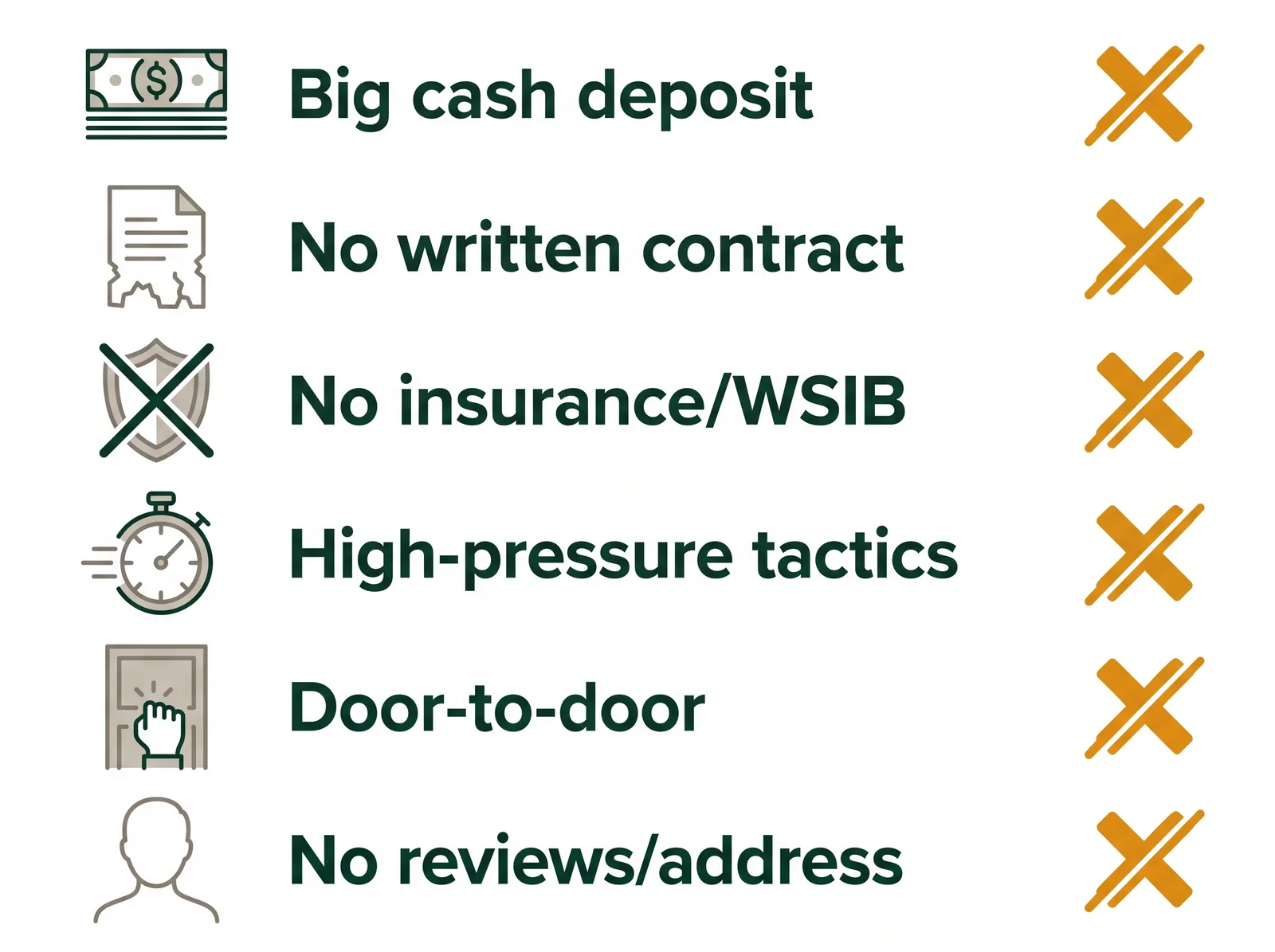
Any one is a warning; a cluster is a decision. Here are the signs that should slow you down.
- A large cash-only deposit or a demand for full payment upfront.
- No written contract, or a vague one with no clear scope, price or timeline.
- No proof of liability insurance or WSIB coverage.
- High-pressure tactics, "today only" pricing, or door-to-door solicitation, especially after a storm.
- No fixed business address and no reviewable track record.
- A price far below every other quote, which usually means something is being left out or the job will not be finished.
From the data: YardQuote tracks 1,091 landscaping and hardscape pros across the GTA (July 2026), and the vast majority carry a multi-year review history averaging well above 4.5 stars. A contractor with no findable reviews anywhere, no address and no history is not a hidden gem; the absence of a track record is itself the flag.
Always ask for a WSIB clearance
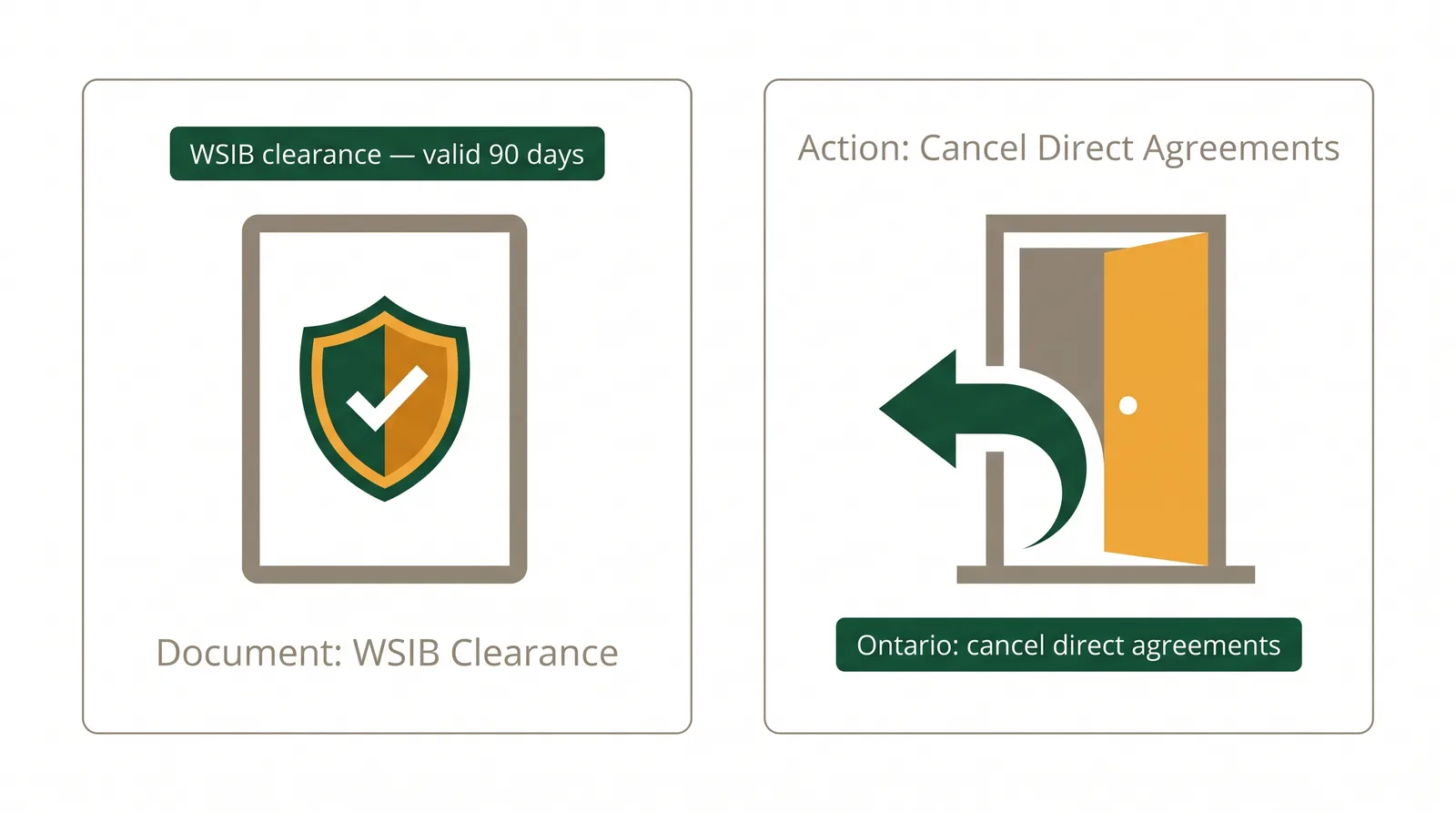
This is the one document most homeowners skip and should not. A WSIB clearance certificate confirms a contractor is registered with Ontario's WSIB and up to date on premiums and reporting, and requesting a current one protects you from liability if a worker is injured on your property (WSIB). It is valid for up to 90 days and can be verified online.
The stakes are real: if an uninsured worker is hurt on your job, you can be exposed. A legitimate contractor provides a current clearance without fuss, so a refusal or an excuse is itself a red flag. Ask for it alongside proof of liability insurance, which covers damage to your property.
What Ontario law does for you
The Consumer Protection Act backs up the paperwork. Ontario restricts unsolicited door-to-door sales of certain home products, and it gives consumers cancellation rights on certain direct agreements, such as contracts signed at your door, within a cooling-off period set by the Act (Consumer Protection Ontario). The exact timeframe and rules are set out by the province, so check Consumer Protection Ontario for the current window before you rely on it.
The practical takeaway is to not put yourself in that position at all: do not sign anything at your door under pressure. The law is a backstop, but the diligence you do before signing, written scope, verified coverage, staged payments, is what actually prevents the loss.
The habit that protects you
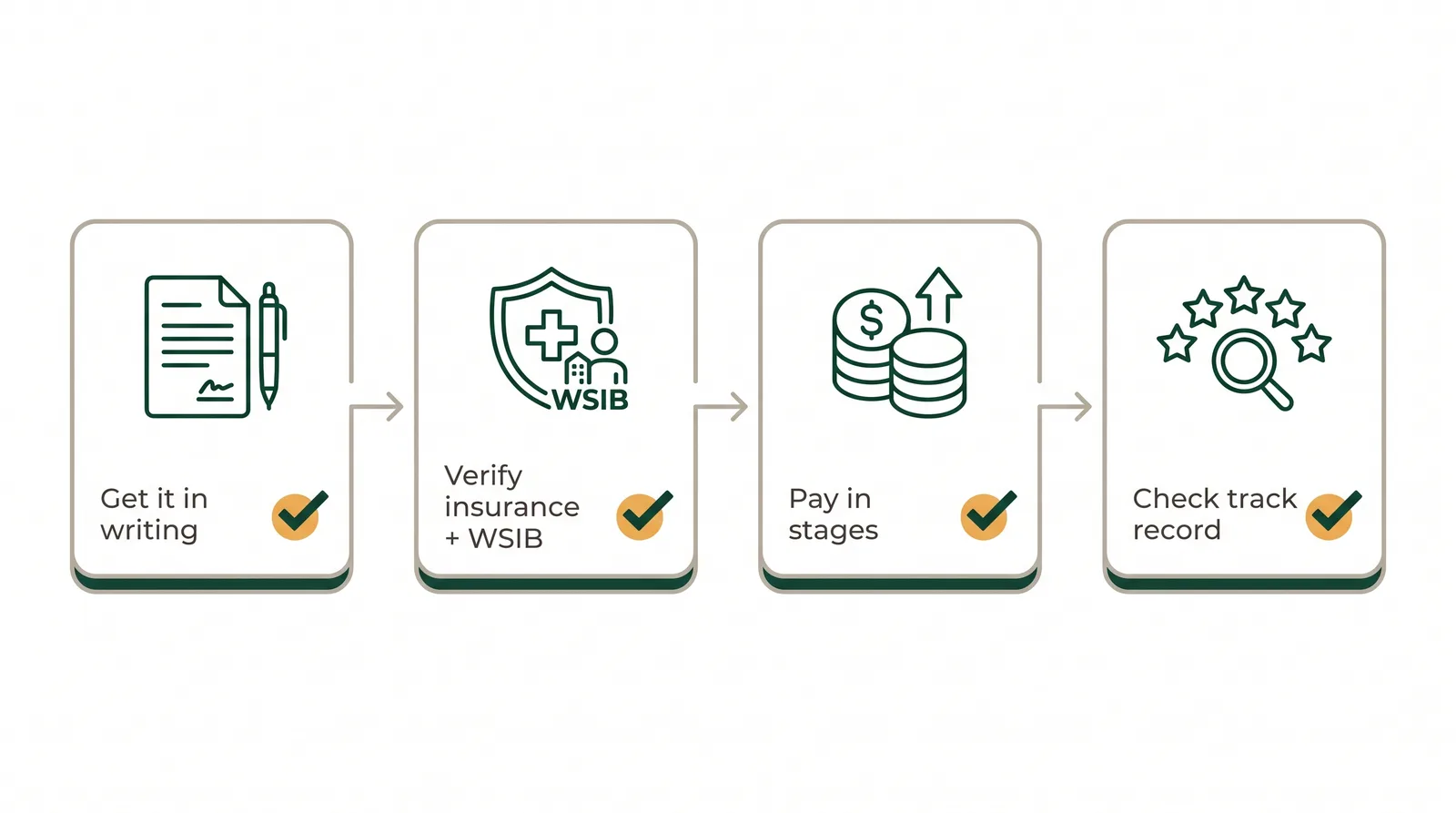
Slow the transaction down. Get the full scope, price and timeline in writing, verify insurance and a current WSIB clearance, keep the deposit modest with payments staged to progress, and never sign under door-step pressure. That single habit defuses almost every contractor scam.
It applies to every trade, including the specialized questions worth asking a tree service and the plain-dollars decision of a lawn service versus DIY. You can compare vetted, reviewable pros on the Toronto landscaping cost page or in your area, such as landscaping in Etobicoke or Scarborough.
Want contractors with a verifiable track record? Request a quote and compare up to three vetted local pros side by side, each with a real review history. Your contact details only go to the one you pick.